
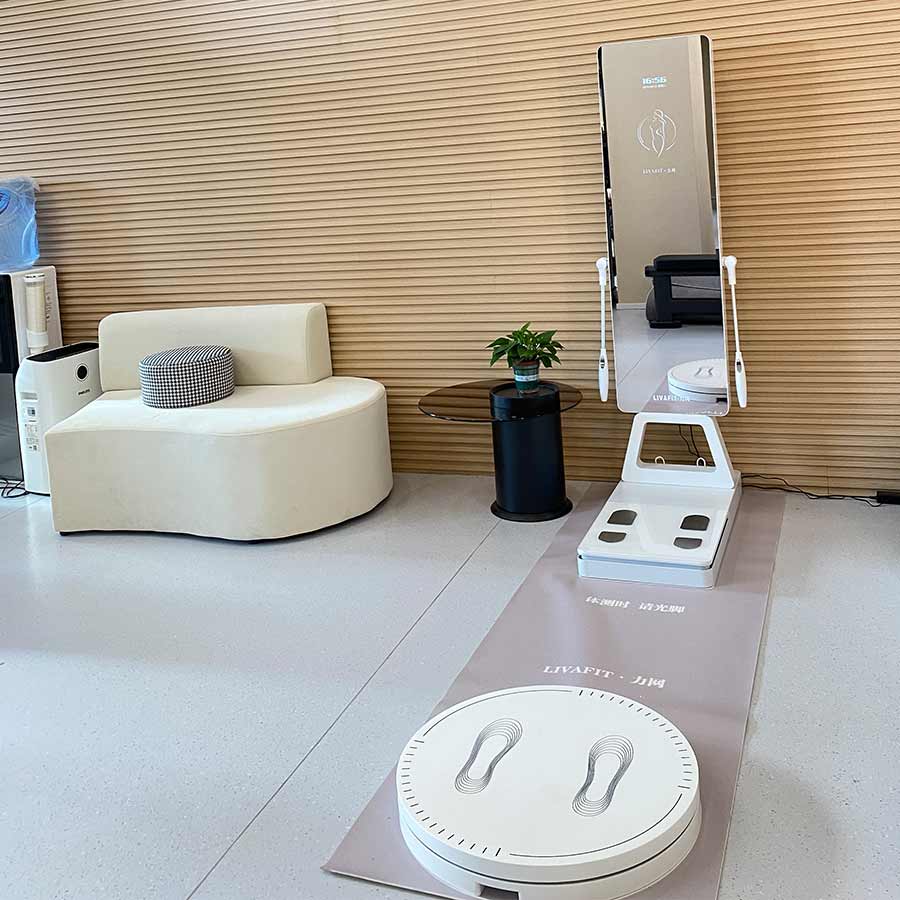
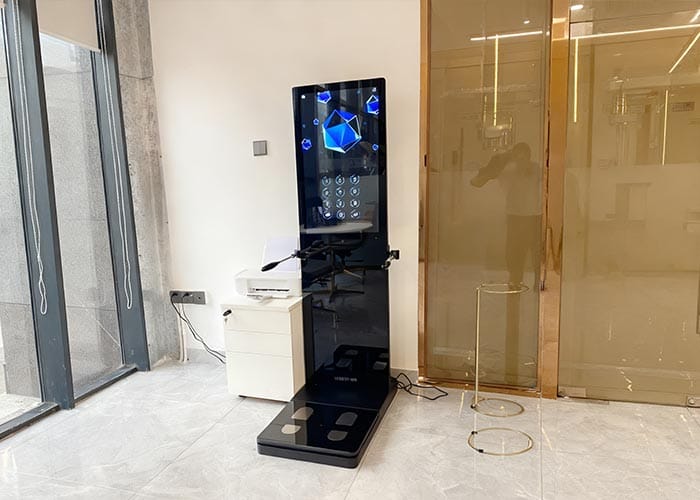

A body composition report can look highly precise. It may display body fat percentage, skeletal muscle mass, body water, visceral fat, segmental balance, basal metabolic rate, and multiple posture indicators. However, the number of displayed metrics does not automatically prove body composition analyzer accuracy.
For a gym, clinic, rehabilitation center, nutrition practice, or health management project, the more useful question is not simply, “Is this device accurate?” A professional buyer should ask:
- Does the device produce repeatable results under the same conditions?
- Is the measurement protocol standardized?
- Does the system measure the whole body or only part of it?
- Are multiple frequencies and segmental pathways used?
- Can the supplier explain calibration, quality control, and software logic?
- Are results suitable for trend monitoring, screening, or professional decision support?
- Can the device export, store, and compare data without changing the original record?
This guide explains how body composition analyzer accuracy should be evaluated before purchasing equipment, training operators, or using reports to guide long-term health and fitness programs.
Table of Contents
Why Body Composition Analyzer Accuracy Is Not One Simple Number
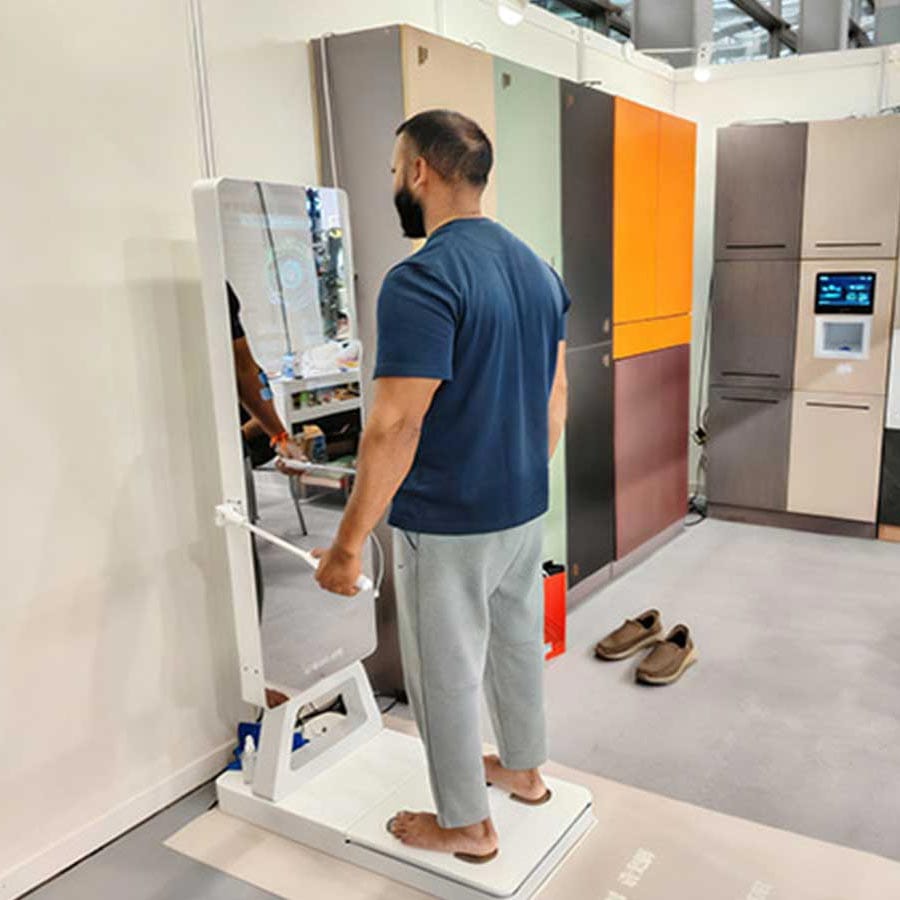
Buyers often expect a supplier to provide a single accuracy percentage. That sounds convenient, but it can hide several different measurement questions.
Accuracy
Accuracy describes how closely an estimate agrees with an accepted reference method. In body composition assessment, reference methods may include dual-energy X-ray absorptiometry, air displacement plethysmography, isotope dilution, or multi-compartment models.
A bioelectrical impedance analysis system does not directly count every kilogram of fat or muscle. It measures electrical impedance and applies equations to estimate body compartments. The American Thoracic Society overview of body composition methods similarly explains that BIA estimates body composition from electrical conductivity rather than measuring each tissue directly.
Precision
Precision describes how closely repeated tests agree with one another. A device may be consistently repeatable while showing a systematic difference from another assessment method.
For commercial monitoring, high precision is essential because staff need to determine whether a reported change is probably real or merely normal measurement variation.
Repeatability
Repeatability asks whether the same person receives similar results when tested repeatedly on the same device, under the same conditions, within a short period.
Strong repeatability is especially important when a facility uses the analyzer to demonstrate changes in muscle, fat, water, or segmental balance.
Reproducibility
Reproducibility considers whether results remain stable when the operator, location, time, or device changes.
This is particularly important for:
- Fitness chains
- Multi-location clinics
- Health screening programs
- Distributors
- Research projects
- Corporate wellness networks
A serious evaluation of body composition analyzer accuracy should therefore separate absolute agreement, short-term repeatability, long-term trend sensitivity, and multi-site reproducibility.
How a Body Composition Analyzer Produces Its Estimates
Most professional systems use bioelectrical impedance analysis, commonly called BIA. A low-level alternating current travels through the body between contact electrodes.
Water-rich lean tissue generally conducts current more readily than adipose tissue, while cell membranes contribute frequency-dependent electrical behavior.
The device first records impedance-related values. Its software then combines those measurements with inputs such as:
- Height
- Weight
- Age
- Sex
- Measurement frequency
- Segmental pathways
- Population-specific variables
The final report is produced through prediction models.
This process has three main layers:
- Signal acquisition: electrodes, sensors, current control, contact quality, and measurement pathways.
- Estimation model: equations and algorithms that convert impedance into body composition estimates.
- Report interpretation: reference ranges, trend calculations, recommendations, and visual presentation.
Weakness in any layer can reduce body composition analyzer accuracy. A stable algorithm cannot correct poor electrode contact, and excellent sensors cannot compensate for an inappropriate prediction model.
The NCBI review of human body composition methods explains that multi-frequency BIA can provide more information about intracellular and extracellular water than a conventional single-frequency approach.
Buyers evaluating professional equipment should therefore look beyond a long metric list and examine how the underlying measurements are obtained.
What Changes Body Composition Analyzer Accuracy Before Testing Starts?
A large share of unexplained variation comes from test conditions rather than from hardware failure.
This is why a standardized operating procedure is as important as the analyzer itself.
Hydration Status
Hydration changes electrical conductivity and fluid distribution.
The result may be affected when a user:
- Drinks a large amount shortly before testing
- Arrives dehydrated
- Has recently exercised
- Has been sweating heavily
- Is recovering from illness
- Has experienced unusual fluid retention
- Has consumed excessive alcohol
A controlled study indexed by PubMed on acute hydration and BIA found that water intake changed estimated body fat and fat mass, reinforcing the need to standardize hydration before comparison tests.
The practical goal is not to force every user into the same absolute hydration level. The objective is to test each person under reasonably similar conditions every time.
Food and Beverages
Food and fluid add mass and can change fluid distribution. Testing immediately after a large meal can reduce comparability with an earlier morning assessment.
For progress monitoring, facilities should define a consistent interval between the last meal and the test.
The interval should be:
- Practical for users
- Clearly communicated
- Consistently applied
- Recorded when necessary
Recent Exercise
Exercise changes:
- Blood flow
- Skin temperature
- Sweat levels
- Fluid distribution
- Muscle blood volume
- Electrode contact conditions
A post-workout result should not be directly compared with a rested baseline.
Gyms often make this mistake because testing appears convenient after a training session. A better workflow is to complete the assessment before exercise or arrange a separate testing appointment.
Bladder Status
A full bladder adds measurable mass and can influence repeatability.
Asking users to use the restroom before testing is a simple step that can improve body composition analyzer accuracy during repeated assessments.
Time of Day
Body mass and water distribution change during the day.
A morning test and an evening test may differ even when no meaningful tissue change has occurred. For long-term programs, repeat testing at approximately the same time of day whenever possible.
Skin and Electrode Contact
Dry skin, lotion, sweat, calluses, socks, hand position, and incomplete contact may interfere with signal quality.
Operators should:
- Inspect contact points
- Keep electrodes clean
- Ensure the user holds the handles correctly
- Confirm full foot contact
- Follow the device instructions
- Avoid improvising the testing posture
Posture and Movement
The user should remain still and maintain the required arm, hand, foot, and body position.
Talking, shifting weight, bending the elbows, releasing the handles, or changing foot position can introduce variation.
Testing Environment
Room temperature, humidity, flooring, electrical conditions, and equipment placement may influence comfort, electrode contact, and equipment operation.
The analyzer should be installed within the supplier’s specified operating range.
The long-standing NIH consensus statement on BIA identifies hydration, food and beverage intake, body position, temperature, and recent physical activity as important measurement variables.
A 2026 expert-endorsed methodological guide also covers methodological standards for bioimpedance and other body composition assessment methods.
Single-Frequency, Multi-Frequency, and Segmental Measurement Compared
Technology configuration can influence what the system is capable of estimating. However, more advanced hardware should still be evaluated through evidence, quality control, and repeated testing.
| Configuration | Typical Measurement Pathway | Main Strength | Main Limitation | Best-Fit Use |
|---|---|---|---|---|
| Single-frequency BIA | One frequency, often with limited contact points | Fast basic estimates | Less information about fluid compartments | General screening and simple tracking |
| Multi-frequency BIA | Several electrical frequencies | Broader impedance information across frequencies | Results still depend on protocol and algorithms | Professional fitness, nutrition, and health management |
| Segmental multi-frequency BIA | Multiple frequencies through arms, legs, and trunk pathways | Regional muscle and fat estimates, asymmetry tracking | Requires stable contact and correct posture | Rehabilitation, sports, advanced fitness, longitudinal assessment |
| Hybrid BIA and 3D scanning | Impedance plus optical body shape or posture data | Combines internal estimates with external shape and circumference trends | Different measurement systems must be interpreted separately | Comprehensive wellness, body shaping, posture, and progress programs |
A buyer should not assume that “multi-frequency” automatically guarantees superior body composition analyzer accuracy in every population.
Multi-frequency technology provides a more detailed measurement framework, but the following still matter:
- Sensor stability
- Pathway design
- Calibration
- Prediction equations
- User preparation
- Contact quality
- Report logic
- Supported population
For a deeper explanation of frequency selection and professional applications, read the internal multi-frequency body composition analyzer guide.
How Commercial Buyers Should Evaluate Body Composition Analyzer Accuracy
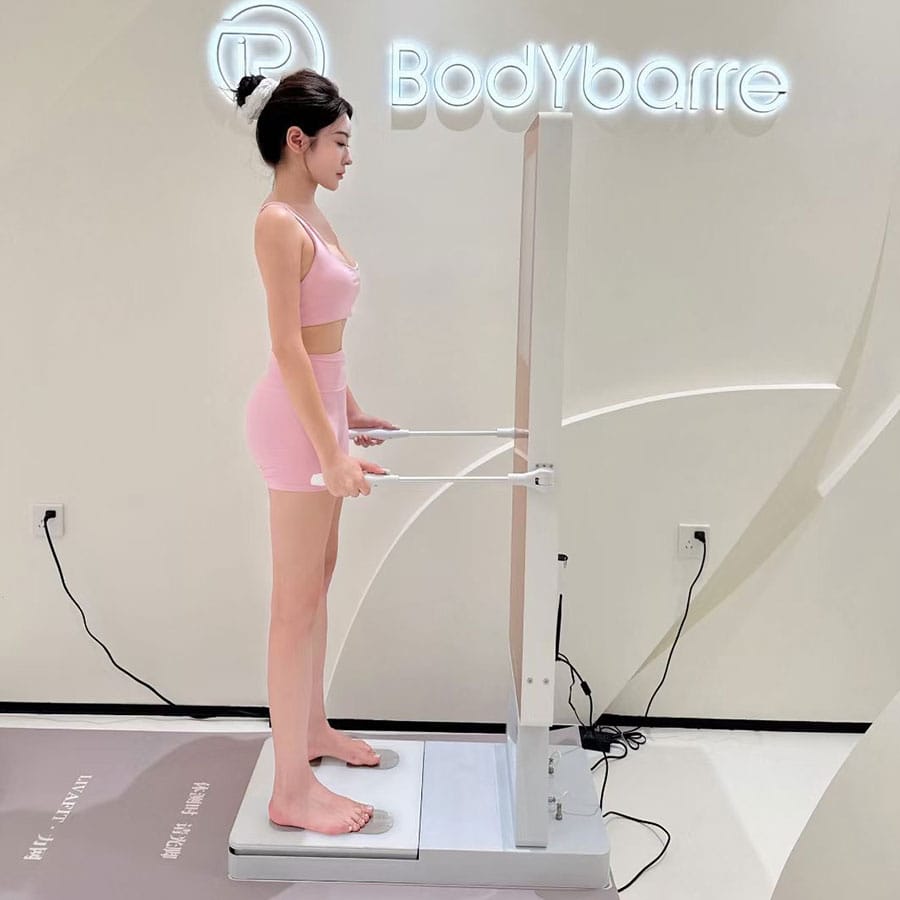
A product demonstration should do more than show a fast test and an attractive report.
Buyers should request a structured technical and operational evaluation.
Ask What Is Actually Measured
Request a clear distinction between:
- Directly measured values
- User-entered values
- Algorithm-estimated values
- Calculated indexes
- Reference-range classifications
- Software-generated recommendations
Impedance, weight, and certain physical dimensions may be directly measured.
Body fat, skeletal muscle, visceral fat rating, body age, ideal weight, and many recommendations are generally estimated or calculated.
This distinction helps operators explain reports responsibly and prevents calculated values from being presented as direct measurements.
Review the Electrode and Measurement Design
Confirm:
- Number of contact electrodes
- Hand-to-foot or foot-only pathways
- Whether the trunk is represented in the measurement model
- Number of frequencies
- Segmental measurement capability
- Maximum supported user weight
- Supported height range
- Contact detection or error warnings
- Cleaning requirements
- Electrode durability
Eight-point hand-and-foot contact is often preferred for professional segmental assessment because it supports multiple measurement pathways.
However, the configuration must still be evaluated through repeatability testing.
Request Repeatability Information
Ask the supplier to explain its internal quality-control process and provide available test documentation.
Useful information may include:
- Repeated measurement variation
- Weight sensor verification
- Impedance calibration procedures
- Production-line inspection records
- Product acceptance criteria
- Software version control
- Device-to-device comparison procedures
- Environmental testing conditions
A 2026 study in Frontiers in Nutrition on BIA device reliability highlights the importance of calibration and measurement uncertainty when evaluating multi-frequency equipment.
Ask About the Validation Population
Prediction models may perform differently across:
- Age groups
- Body sizes
- Activity levels
- Health conditions
- Geographic populations
- Body composition ranges
Ask the manufacturer:
- Which age range is supported?
- Which users were included during development?
- Are there exclusions or warning conditions?
- Does the device use different operating modes?
- Can supporting documentation be provided?
- Are the reference ranges appropriate for the target market?
- Are children, older adults, athletes, or people with unusual fluid status evaluated separately?
A statement such as “validated against a reference method” is incomplete without information about the population, sample size, protocol, measured variables, and statistical method.
Evaluate the Report, Not Only the Measurement
Body composition analyzer accuracy can be undermined by poor report design.
Reports should distinguish measurements from estimates, show units, retain previous values, and avoid presenting every number as a diagnosis.
A useful commercial report should include:
- Test date and time
- User profile used for calculation
- Main body composition estimates
- Segmental results where supported
- Reference ranges
- Historical comparison
- Clear warnings or limitations
- Export and printing options
- Operator notes
- Data authorization controls
The commercial body composition analyzer product range includes systems with multi-frequency measurement, report management, and different combinations of posture, circumference, physical function, and comprehensive assessment features.
A Practical 10-Test Body Composition Analyzer Accuracy Protocol
One of the most useful ways to evaluate body composition analyzer accuracy is to conduct a controlled demonstration rather than relying only on a brochure.
Step 1: Select Two or Three Test Participants
Choose participants with different body sizes and physical characteristics.
Avoid testing anyone immediately after:
- Exercise
- A heavy meal
- Unusually high fluid intake
- Alcohol consumption
- Sauna use
- Long-distance travel
Step 2: Standardize Preparation
Record:
- Test time
- Last meal
- Recent fluid intake
- Recent exercise
- Rest period
- Clothing
- Bladder status
- Room conditions
This information allows unexpected results to be investigated rather than dismissed as random variation.
Step 3: Perform Three Consecutive Tests
Have the first participant step off, reset, and repeat the full positioning process between tests.
Do not simply keep the person standing on the platform.
Compare:
- Weight
- Body fat percentage
- Skeletal muscle mass
- Total body water
- Segmental muscle
- Segmental fat
- Impedance values, when available
Small differences are expected, but repeated results should not change without a clear reason.
Step 4: Change the Operator
A second trained operator should repeat the procedure.
This reveals whether the instructions are clear enough to reduce operator-dependent variation.
If results change significantly when another staff member performs the test, the problem may be:
- Inadequate training
- Unclear positioning guidance
- Poor contact detection
- Inconsistent data entry
- An overly complicated workflow
Step 5: Repeat the Test on Another Day
Repeat the assessment on another day at a similar time and under similar preparation conditions.
Same-day precision alone does not prove long-term body composition analyzer accuracy.
Step 6: Test Contact Error Handling
With supplier supervision, determine how the system responds to incomplete hand or foot contact.
A professional device should identify invalid contact, display an error, or prevent the operator from accepting a clearly compromised measurement.
Step 7: Review Raw and Final Data
Check whether the software preserves the original result.
Also confirm:
- Whether reports can be edited
- Whether edits are recorded
- Whether profile changes affect previous tests
- Whether original impedance data are available
- Whether deleted records can be recovered
- Whether exports match the on-screen report
Trend integrity is part of body composition analyzer accuracy in real-world operations.
Step 8: Compare Two Units When Possible
For multi-location projects, test the same participants on two units of the same model under controlled conditions.
Large unit-to-unit differences may create problems when clients move between branches.
Step 9: Test Export and Historical Comparison
Export reports through every channel the organization expects to use.
Confirm that the following remain consistent:
- Units
- Decimal places
- Timestamps
- Reference ranges
- User identity
- Test history
- Device identity
- Software version
Step 10: Define Acceptance Criteria
Before placing an order, agree on measurable acceptance requirements for:
- Weight measurement
- Repeatability
- System functions
- Report generation
- Connectivity
- Printing
- Accessories
- Data export
- Operator training
- Software language
This protocol does not replace an independent laboratory validation study. It does, however, help buyers identify unstable operation, unclear workflows, contact problems, software inconsistencies, and unrealistic sales claims.
Why Trend Accuracy Can Matter More Than a Perfect One-Time Result
Many commercial users are monitoring change rather than trying to establish an unquestionable absolute value from a single test.
A fitness member may want to know whether skeletal muscle is increasing over twelve weeks.
A nutrition client may need to see whether estimated fat mass is trending downward while lean mass is maintained.
A rehabilitation professional may monitor left-right segmental differences over time.
For these applications, consistency is critical.
A useful trend program should:
- Use the same device whenever possible.
- Use the same testing protocol.
- Repeat at a similar time of day.
- Avoid comparing pre-workout with post-workout results.
- Record unusual hydration, illness, travel, or medication changes.
- Interpret several measurements rather than one isolated fluctuation.
- Define what size of change is meaningful.
- Review longer-term trends instead of daily noise.
Research comparing multiple BIA devices has found that repeatability can be high while agreement with reference methods varies between devices. This distinction is central to understanding body composition analyzer accuracy.
A device may be useful for monitoring trends without being interchangeable with every other assessment method or analyzer.
How Body Composition Analyzer Accuracy Requirements Change by Application
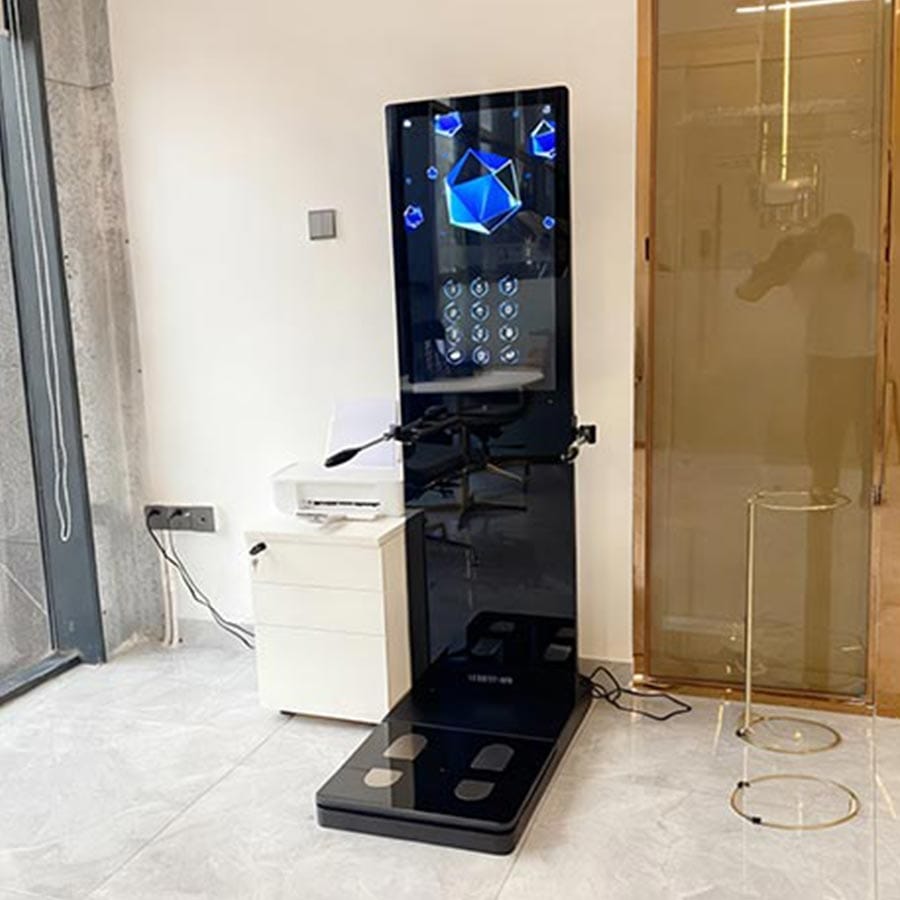
Different users require different levels of detail, workflow control, and interpretation.
Gyms and Personal Training Studios
The priorities are:
- Repeatable progress tracking
- Understandable reports
- Rapid operation
- Reliable member history
- Easy staff training
- Clear trend visualization
A gym should pay close attention to:
- Testing before exercise
- Member preparation instructions
- Segmental muscle trends
- Report explanation
- Multi-location data consistency
- Historical report access
The internal gym body analyzer selection guide provides additional guidance on selecting equipment for member assessment workflows.
Nutrition and Weight Management Centers
These facilities often need to separate scale-weight change from estimated changes in:
- Fat mass
- Lean mass
- Skeletal muscle
- Body water
- Visceral fat
- Segmental composition
Useful controls include:
- Similar fasting conditions
- Consistent hydration instructions
- Trend graphs
- Clear explanations of water variation
- Repeat schedules aligned with the intervention
Rehabilitation and Sports Programs
Segmental data, balance, posture, and physical-function information may be more important than a single whole-body percentage.
A meaningful rehabilitation workflow may review:
- Left-right muscle balance
- Lower-limb distribution
- Changes in body water
- Balance performance
- Postural stability
- Movement control
- Long-term progress
The BIA analyzer with motor function assessment is intended for projects that require body composition information together with balance and physical-function evaluation.
Comprehensive Wellness and Body-Shaping Projects
These programs may combine impedance estimates with 3D posture and circumference measurements.
Each data type should be interpreted according to its own limitations.
For example:
- BIA estimates internal body compartments.
- Optical scanning measures external shape.
- Circumference tracking shows dimensional change.
- Posture analysis identifies visible alignment characteristics.
- Historical reports show direction of change.
A full-dimensional body analyzer with 360-degree scanning can support body composition, posture, circumference, report sharing, and historical data workflows.
Buyers should verify the repeatability of both the impedance and optical measurement processes.
Clinics and Health Screening Programs
Professional health users require stronger:
- Documentation
- Scope-of-use definitions
- Data security
- Operator training
- Preparation protocols
- Quality-control procedures
- Interpretation standards
BIA results should support assessment and monitoring within a broader professional workflow. They should not automatically be presented as a standalone diagnosis.
The Obesity Medicine Association clinical practice statement notes that BIA accuracy depends on hydration and describes preparation considerations such as removing metal, emptying the bladder, and avoiding activities or substances that may disturb measurement conditions.
Data Management Is Part of Body Composition Analyzer Accuracy
A reliable measurement can lose value when software records are incomplete, overwritten, mismatched, or difficult to compare.
Commercial buyers should review:
- Unique user identification
- Duplicate-record handling
- Test date and time
- Device serial number
- Software version
- Algorithm version
- Operator identity
- Original result preservation
- Cloud or local storage options
- Export format
- API documentation
- Permission management
- Backup and recovery
- Privacy and deletion workflows
When an algorithm or reference range changes, the system should explain whether historical results will be recalculated.
Silent recalculation can create an artificial trend that did not exist in the original measurements.
For chains and distributors, body composition analyzer accuracy also includes the ability to compare data across locations without mixing:
- User profiles
- Measurement units
- Software versions
- Reference ranges
- Device records
- Operator permissions
Common Mistakes That Create False Confidence
Judging Accuracy by the Number of Metrics
A report with fifty outputs is not automatically more accurate than a report with twenty.
Many outputs may be derived from the same underlying measurements. Buyers should focus on the quality and relevance of the data rather than the length of the report.
Comparing Different Devices as Though They Are Interchangeable
Different systems may use different:
- Electrode configurations
- Frequencies
- Measurement pathways
- Prediction equations
- Reference populations
- Profile inputs
A result from one device should not automatically be treated as identical to a result from another.
Treating DXA as a Perfect Answer in Every Situation
DXA is a widely used reference method, but every body composition method has assumptions, technical limits, and protocol requirements.
The more appropriate question is whether a device has been evaluated appropriately and whether it is suitable for the intended application.
Ignoring User Preparation
Even a well-designed analyzer may produce inconsistent results when users are measured:
- After exercise
- After a large meal
- Under changing hydration conditions
- At very different times
- With poor electrode contact
- In different clothing
Accepting Undefined “Medical-Grade” Claims
Ask what standard, validation, certification, intended use, and evidence support the claim.
Marketing language alone does not establish body composition analyzer accuracy.
Testing Only One Person Once
A single demonstration may show that the screen, printer, and software work.
It does not demonstrate:
- Repeatability
- Reproducibility
- Long-term trend quality
- Device-to-device consistency
- Operator consistency
Focusing on Hardware but Ignoring Software
Incorrect profile data, lost history, changed units, duplicate records, and poorly controlled access can damage the reliability of the program even when the physical measurement is stable.
Body Composition Analyzer Accuracy Buyer Checklist
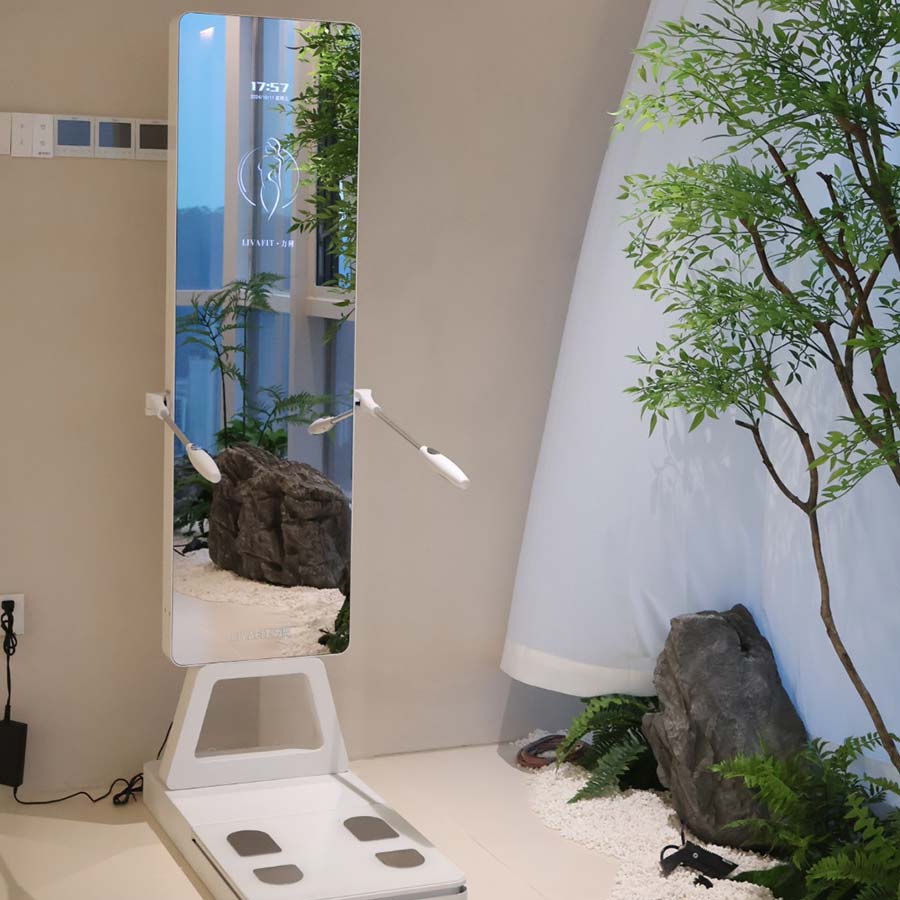
Before selecting a system, verify the following:
| Area | Buyer Question | Why It Matters |
| Measurement | What values are directly measured? | Separates hardware output from estimates |
| Frequencies | Which frequencies are used? | Clarifies the impedance measurement design |
| Pathways | Is the analysis segmental and hand-to-foot? | Affects regional assessment capability |
| Repeatability | What repeated-test information is available? | Indicates short-term consistency |
| Calibration | How are impedance and weight checked? | Supports ongoing quality control |
| Population | Who was included during development or validation? | Helps determine suitability |
| Protocol | What preparation is required? | Reduces physiological variation |
| Reports | Are estimates and reference ranges clearly labeled? | Supports responsible interpretation |
| Data | Can original results be preserved and exported? | Protects trend integrity |
| Multi-site use | Can units and software versions be standardized? | Supports network consistency |
| Training | Is operator training included? | Reduces workflow errors |
| Scope | Is the intended application clearly defined? | Prevents unsupported claims |
Buyers comparing commercial body composition analyzer solutions should use this checklist during demonstrations, technical discussions, and final product acceptance.
FAQ
How accurate is a body composition analyzer?
There is no universal accuracy value for every device, person, metric, and testing condition.
Body composition analyzer accuracy depends on:
- Hardware design
- Measurement pathways
- Frequencies
- Algorithms
- Validation population
- Calibration
- User preparation
- The parameter being evaluated
Is multi-frequency BIA always more accurate?
Multi-frequency BIA provides impedance information at several frequencies and can support more detailed fluid and segmental models.
However, it is not automatically superior in every population or application. Validation, repeatability, contact design, and standardized testing remain necessary.
Why do two analyzers give different body fat percentages?
The devices may use different electrode configurations, frequencies, pathways, equations, reference populations, or user-profile inputs.
Testing conditions may also differ.
For progress tracking, it is generally more consistent to use the same device and the same protocol.
Can hydration change body composition results?
Yes. Hydration and fluid distribution can change impedance and the resulting estimates.
Users should follow a consistent preparation protocol, particularly when comparing results over time.
Should clients test before or after exercise?
Testing before exercise is generally more consistent for longitudinal monitoring.
Exercise can change temperature, sweat, circulation, and fluid distribution, reducing the comparability of the results.
Is repeatability the same as accuracy?
No.
Repeatability describes how closely repeated measurements agree with each other. Accuracy describes agreement with an accepted reference or value.
Both are important, but they answer different questions about body composition analyzer accuracy.
Can a body composition analyzer diagnose disease?
A body composition analyzer may support screening, assessment, monitoring, and professional decision-making within its intended application.
It should not be presented as a standalone diagnostic system unless the specific device, market authorization, supporting evidence, and professional context support that claim.
What should a buyer request from the manufacturer?
Request:
- Technical specifications
- Supported populations
- Measurement information
- Calibration procedures
- Repeatability information
- Sample reports
- Operator instructions
- Software details
- Data management options
- Quality-control records
- A controlled demonstration
How often should users be retested?
The schedule should match the program and the size of change expected.
Testing too frequently may highlight normal short-term fluid variation rather than meaningful changes in tissue.
Whatever interval is selected, preparation conditions should remain consistent.
How can I compare models for my application?
Define which measurements, workflows, report channels, data integrations, physical-function features, posture functions, and customization options are required.
Then perform a controlled repeatability test.
For project-specific model selection, contact the technical team with information about your industry, expected daily testing volume, required reports, and software integration needs.
Conclusion
Body composition analyzer accuracy is not proven by a polished report, a long parameter list, or a single successful demonstration.
It is built through:
- Stable signal acquisition
- Appropriate estimation models
- Calibration
- Standardized user preparation
- Repeatable operation
- Responsible interpretation
- Reliable data management
For commercial buyers, the best evaluation combines documentation with hands-on verification.
Ask:
- What is measured?
- What is estimated?
- How is the system calibrated?
- Which populations are supported?
- How do repeated tests behave?
- Can different operators reproduce the workflow?
- Are original reports preserved?
- Can multiple locations use consistent settings?
Test more than one person, involve more than one operator, repeat the assessment on another day, and verify the complete report and data workflow.
The most useful body composition system is not necessarily the one that promises a perfect number. It is the one that produces consistent, explainable, and actionable results within a clearly defined professional application.