

Table of Contents
Understanding What a Body Analyzer Does

A body analyzer goes far beyond simple weight measurement. Modern body composition analyzers use advanced bioelectrical impedance analysis (BIA) technology to provide comprehensive insights into your members’ physical condition. By sending safe, low-level electrical currents through the body, these devices measure how quickly different tissues conduct electricity—muscle and water-rich tissues conduct faster than fat, allowing precise calculations of body composition.
Key Measurements: Body Fat, Muscle Mass, BMI, Hydration
Professional body analyzers deliver a complete picture of health through multiple metrics:
- Body Fat Percentage: Essential for tracking weight loss progress and assessing overall health risks
- Muscle Mass: Critical for strength training, athletic performance, and metabolic health
- Body Mass Index (BMI) : A quick screening tool for weight categories
- Hydration Levels: Total body water measurement helps optimize performance and recovery
Advanced body composition analyzers also provide visceral fat ratings, segmental muscle analysis, basal metabolic rate (BMR), and bone mineral content—offering insights that transform how trainers approach fitness programming.
How Body Analyzers Help Track Fitness Progress
Traditional scales only show weight changes, which can be misleading. A member might gain muscle while losing fat, appearing weight-stagnant despite significant progress. Body composition analyzers reveal these crucial changes, allowing trainers and members to:
- Validate training effectiveness with objective data
- Identify plateaus early and adjust programs accordingly
- Celebrate non-scale victories that keep members motivated
- Make evidence-based decisions about nutrition and exercise modifications
Types of Body Analyzers: Digital vs Professional vs Smart
The market offers three primary categories:
- Digital Body Analyzer Scales: Basic models providing essential metrics at accessible price points
- Smart Body Analyzers: App-connected devices with cloud storage and trend tracking
- Professional Body Analyzers: Medical-grade equipment with multi-frequency BIA and segmental analysis capabilities
Each serves different gym environments and member needs, which we’ll explore in detail throughout this guide.
Benefits of Using a Body Analyzer in Your Gym
Integrating quality body composition analysis into your gym operations delivers measurable advantages across multiple dimensions of your business.
Accurate Health and Fitness Tracking
Professional-grade body analyzers provide consistency and reliability that consumer devices cannot match. Research demonstrates that multi-frequency BIA systems achieve correlation coefficients above 0.96 with gold-standard DEXA scans when properly calibrated and used. This precision means trainers can:
- Design programs based on actual body composition, not assumptions
- Monitor hydration status affecting performance and recovery
- Track visceral fat reduction—critical for metabolic health
- Identify muscle imbalances that could lead to injury
Motivating Gym Members with Measurable Results
Psychological research consistently shows that visible, measurable progress drives adherence. When members see their body fat percentage drop while muscle mass increases, they become more invested in their fitness journey. A 2025 study of gym retention found that facilities offering regular body composition analysis saw 27% higher member retention rates than those without.
The visual impact of seeing objective data creates powerful motivation:
- Before-and-after comparisons that validate effort
- Real-time feedback during training blocks
- Goal setting based on realistic, personalized targets
- Competitive elements through leaderboards and challenges
Supporting Personalized Training Plans
Every body responds differently to exercise stimuli. Body analyzers enable truly personalized programming by revealing:
- Metabolic individuality through BMR measurements
- Muscle quality indicators (phase angle in advanced models)
- Hydration patterns affecting training capacity
- Recovery status through body water distribution
Personal trainers leveraging this data create more effective programs, leading to better results for clients and higher value for their services. This scientific approach positions your gym as a premium facility committed to evidence-based fitness.
Different Types of Body Analyzers
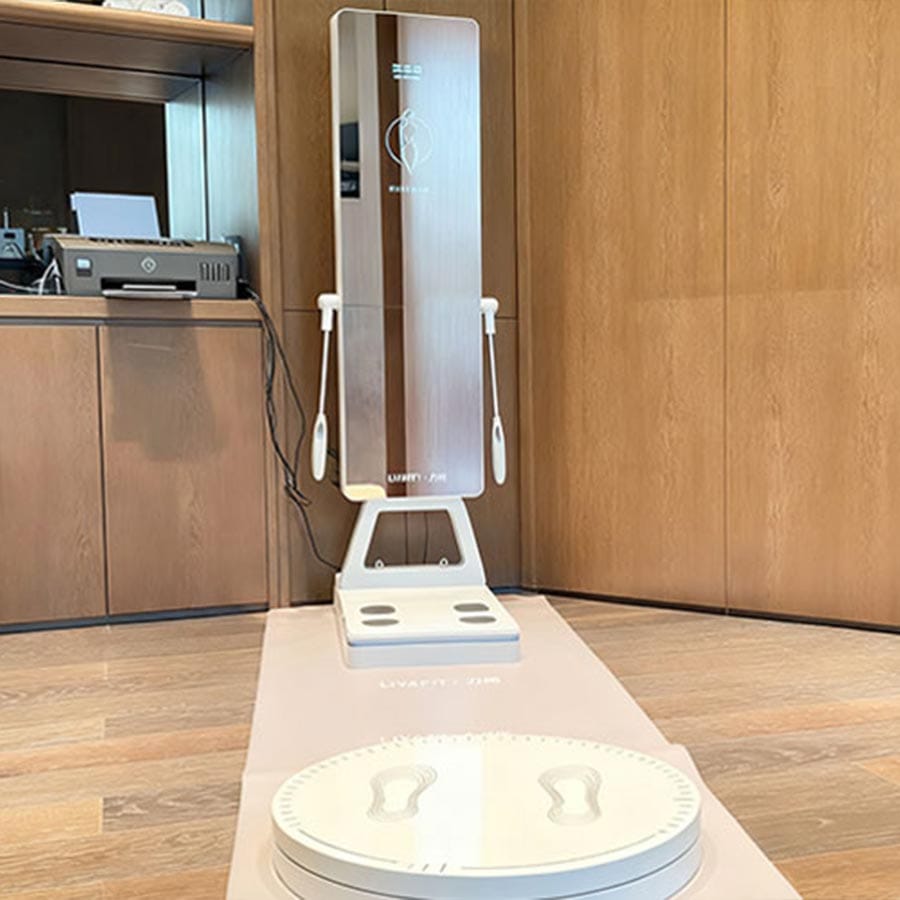
Selecting the right type of body analyzer depends on your gym’s size, member demographics, and service offerings. Understanding the distinctions helps match equipment to your specific operational needs.
Digital Body Analyzer Scales: Features and Advantages
Digital body analyzer scales represent the entry point for body composition technology. These foot-to-foot BIA devices measure impedance through the legs, estimating whole-body composition based on algorithms. Key characteristics include:
- Affordability: Lower investment threshold, typically $200-800
- Simplicity: Easy operation with minimal training required
- Portability: Compact designs suitable for small studios
- Basic Metrics: Body fat percentage, muscle mass estimate, BMI, hydration
While limited compared to professional models, quality digital scales provide valuable trend data for general fitness tracking. They work best in environments where space and budget are constraints but basic composition monitoring is desired.
Smart Body Analyzers with App Integration
Smart body analyzers bridge the gap between affordability and advanced functionality through connectivity:
- Cloud-Based Data Storage: Member history accessible from any device
- Mobile App Integration: Seamless sync with fitness apps and wearables
- Automated Tracking: Reminders and progress notifications
- Multi-User Support: Family or facility-wide usage with individual profiles
These devices typically offer Bluetooth or Wi-Fi connectivity, allowing data to flow directly into your gym management system or members’ personal health apps. The convenience of automatic tracking increases engagement and provides trainers with longitudinal data for program optimization.
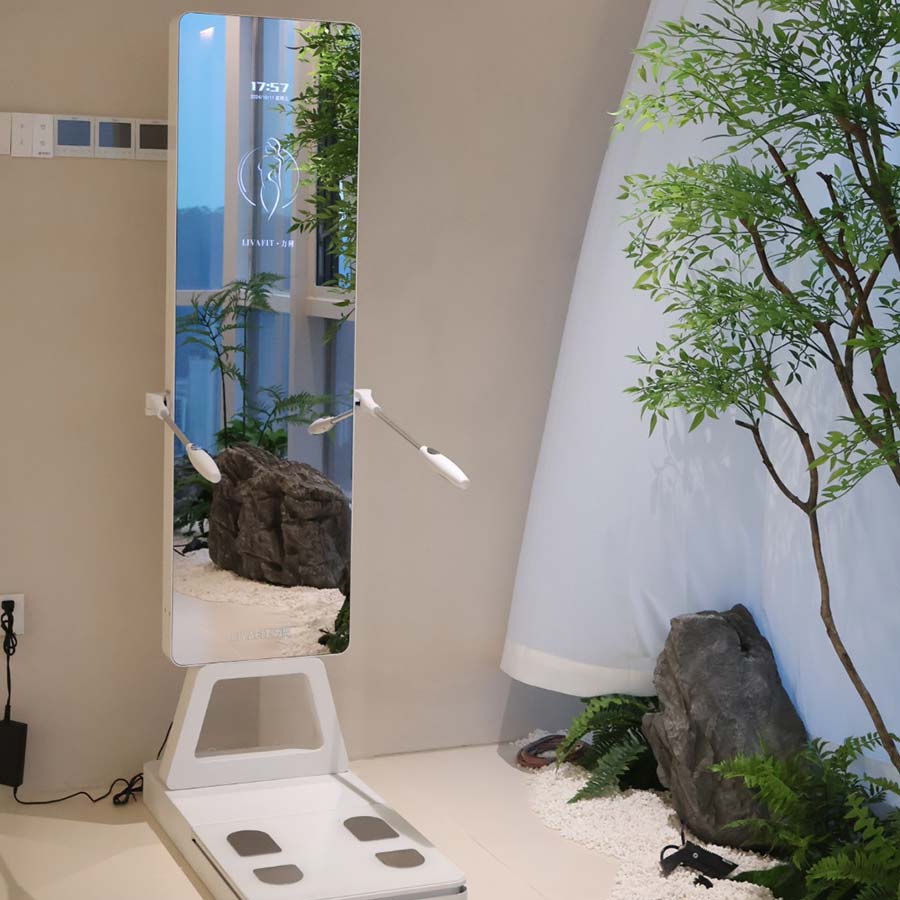
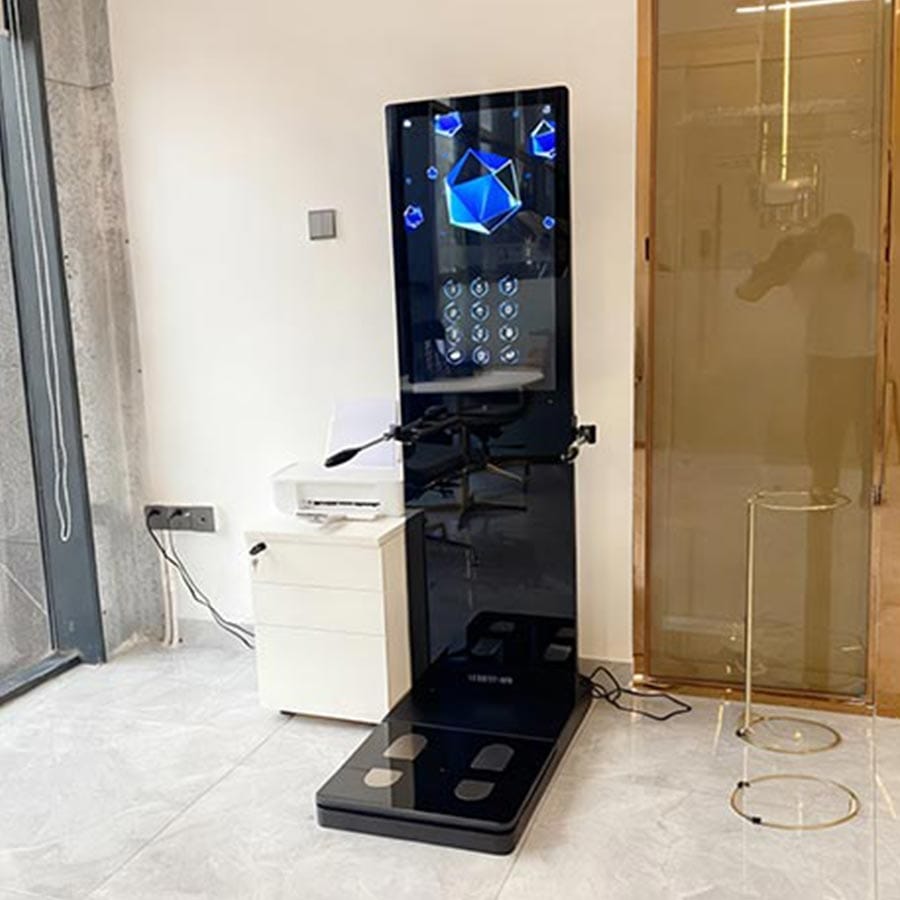
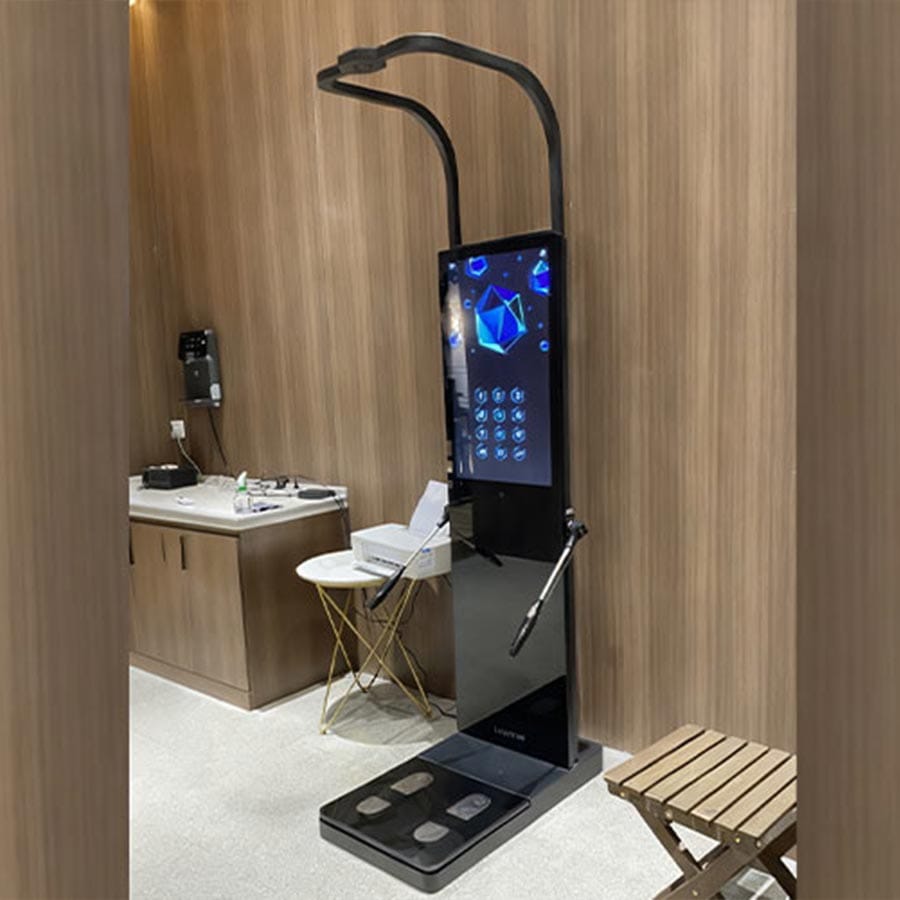
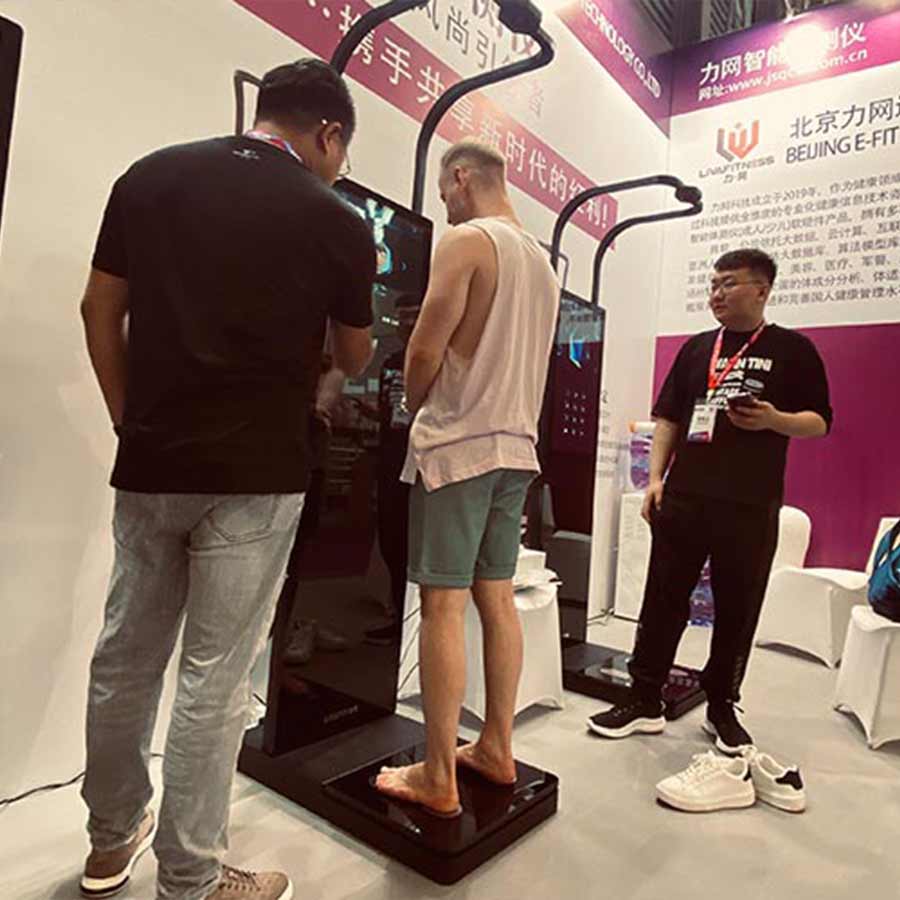
Professional Body Analyzers for Commercial Gyms
Professional-grade body composition analyzers represent the gold standard for accuracy and comprehensiveness. These medical-caliber devices feature:
- Multi-Frequency BIA: Using multiple current frequencies (typically 1kHz to 1MHz) to penetrate different tissue depths
- Segmental Analysis: Independent measurement of arms, legs, and trunk for precise localization
- 8-Point Contact Electrodes: Hand and foot electrodes ensuring consistent measurement positioning
- Advanced Metrics: Visceral fat rating, phase angle (cellular health), segmental lean mass analysis
Professional analyzers deliver correlation coefficients exceeding 0.97 with DEXA scans, making them suitable for clinical applications and high-performance athletic training. The investment ranges from $3,000 to $15,000, but the enhanced capabilities justify the cost for facilities serving serious athletes and health-conscious members.
Wireless Body Analyzers for Group or Personal Use
Wireless solutions offer flexibility for various deployment scenarios:
- Group Fitness Settings: Quick assessments before classes without cables
- Personal Training Sessions: Portable units for client homes or outdoor training
- Multi-Station Configurations: Several units sharing a central data management system
- Battery Operation: Use anywhere without power outlet dependency
These analyzers typically combine professional-grade measurement technology with wireless convenience, making them ideal for dynamic gym environments and mobile trainers.
Key Features to Look for When Choosing a Body Analyzer
Evaluating specific features ensures you select equipment that aligns with your operational requirements and member expectations.
Accuracy and Measurement Reliability
Accuracy varies dramatically across body analyzer categories and brands. Key factors include:
- Technology Type: Multi-frequency BIA outperforms single-frequency models
- Electrode Configuration: 8-point systems provide superior reproducibility to 4-point designs
- Validation Data: Look for devices with published research comparing results to gold standards
- Repeatability: Consistent results across multiple measurements
When assessing accuracy claims, request independent validation studies rather than relying solely on manufacturer specifications. Professional devices should provide technical documentation showing correlation coefficients and error margins compared to reference methods.
Multi-User Profiles and Memory Storage
For commercial environments, user management capabilities are essential:
| Feature | Small Studio | Mid-Size Gym | Large Chain |
|---|---|---|---|
| User Capacity | 50-100 profiles | 500-1,000 profiles | Unlimited with cloud |
| Data History | 30-90 days | 1-2 years | 5+ years |
| Privacy Controls | Basic PIN | Individual passwords | Role-based access |
| Export Options | PDF reports | CSV + PDF | Full API integration |
Ensure the system supports your projected member base and allows secure data management compliant with privacy regulations.
Connectivity: Bluetooth and App Support
Modern gym operations require seamless data flow:
- Automatic Syncing: Eliminates manual data entry and reduces errors
- Platform Integration: Compatibility with gym management software
- Member Access: Personal portals for viewing progress outside the gym
- Remote Monitoring: Trainers can review results between sessions
Prioritize devices with open APIs or established integrations with popular fitness platforms. This future-proofs your investment as technology ecosystems evolve.
Data Analysis and Trend Tracking
Advanced analytics capabilities transform raw measurements into actionable insights:
- Longitudinal Tracking: Visual charts showing progress over time
- Comparative Analysis: Member data vs. age/gender norms
- Goal Progress: Automated tracking toward personalized targets
- Printable Reports: Professional documentation for client consultations
The best systems provide intuitive dashboards that highlight key trends and flag areas requiring attention, making data interpretation efficient for both trainers and members.
How to Assess the Accuracy of a Body Analyzer
Understanding accuracy factors helps you make informed purchasing decisions and set appropriate expectations for measurement reliability.
Understanding Bioelectrical Impedance Analysis (BIA)
BIA technology relies on the principle that different body tissues conduct electrical currents at different rates:
- Fat Tissue: Low water content (≈10%), poor conductivity, high resistance
- Muscle Tissue: High water content (≈75%), excellent conductivity, low resistance
- Body Water: Primary conductor of electrical current
The device measures impedance (resistance to current flow) and applies mathematical models incorporating height, weight, age, and gender to calculate body composition. The sophistication of these algorithms significantly impacts accuracy.
Comparing Digital vs Professional Equipment Accuracy
Research consistently shows substantial accuracy differences between device categories:
| Measurement Method | Typical Error vs. DEXA | Best Use Case |
|---|---|---|
| Underwater Weighing | ±2-3% | Research validation |
| DEXA Scan | ±1-2% | Gold standard |
| Professional BIA | ±3-5% | Clinical/athletic use |
| Consumer BIA Scale | ±5-10% | Home fitness tracking |
| Handheld BIA | ±7-12% | Basic screening |
Professional multi-frequency analyzers with segmental analysis approach clinical accuracy, making them suitable for medical applications and high-performance training. Consumer-grade devices provide valuable trend data when used consistently but lack precision for absolute measurements.
Factors Affecting Measurement: Hydration, Food, Exercise
Several variables influence BIA measurements regardless of device quality:
- Hydration Status: Dehydration increases measured body fat; overhydration decreases it
- Recent Meals: Digestion alters body water distribution
- Exercise Intensity: Sweat loss affects impedance measurements
- Time of Day: Natural hydration variations throughout the day
- Alcohol Consumption: Dehydrating effects lasting 24-48 hours
- Menstrual Cycle: Hormonal water retention in women
Standardized testing protocols minimize these variables:
- Measure at consistent times (ideally morning, fasted state)
- Avoid exercise, alcohol, and large meals 3-4 hours before testing
- Maintain consistent hydration patterns
- Use the restroom before measurement
- Remove socks and jewelry
Training staff and members on proper procedures ensures consistent, comparable results over time.
Choosing the Right Body Analyzer for Your Gym’s Size
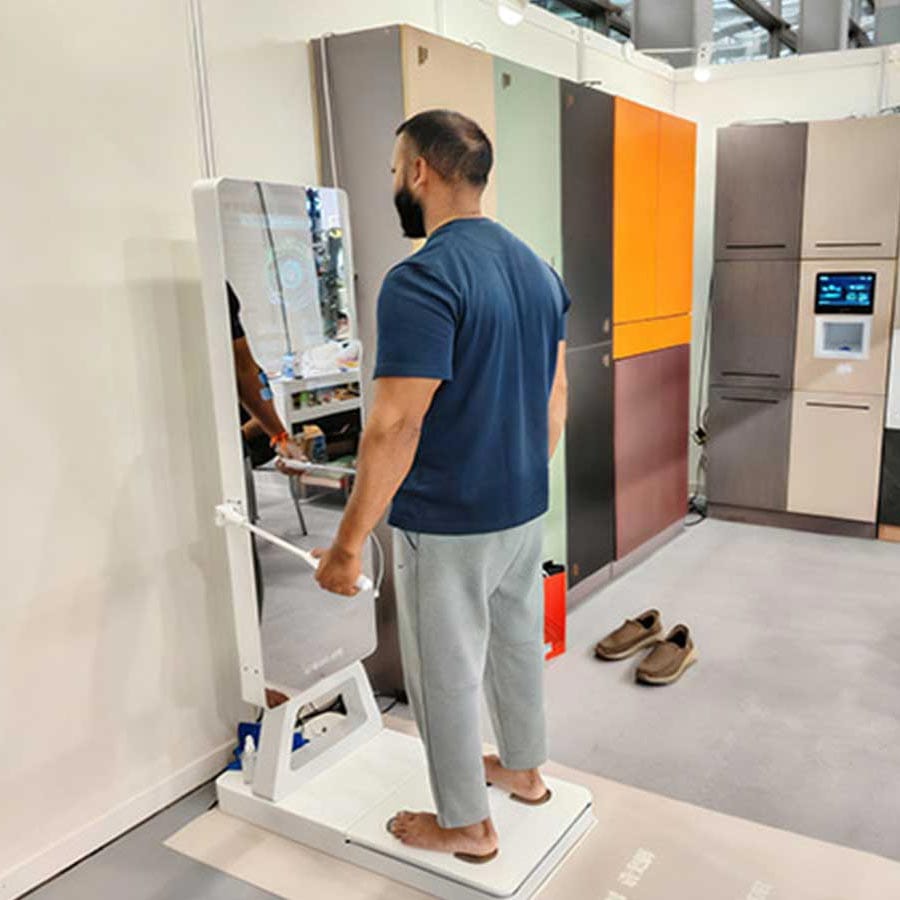
Your facility’s scale and business model significantly influence the optimal body analyzer selection.
Small Fitness Studios vs Large Commercial Gyms
Small Studios (Under 500 sq. ft., 50-200 members)
- Prioritize: Compact footprint, affordability, ease of use
- Recommended: Mid-range digital scale or smart analyzer ($500-1,500)
- Key Features: Bluetooth connectivity, basic trend tracking, multi-user support
- Deployment: Single unit in assessment area or portable for personal training
Large Commercial Gyms (5,000+ sq. ft., 500+ members)
- Prioritize: Throughput, advanced features, professional accuracy
- Recommended: Professional analyzer with segmental analysis ($5,000-15,000)
- Key Features: Multiple user profiles, comprehensive reporting, data export capabilities
- Deployment: Dedicated assessment station with printer and consultation area
Midsized Facilities (Between the above extremes)
- Balance cost with capability
- Consider smart analyzers with professional features
- Plan for scalability as membership grows
Personal Trainer Needs vs Multi-Member Use
Personal Training Focus
- Emphasis on individualized assessments and progress tracking
- Need for detailed segmental analysis and advanced metrics
- Integration with training program software
- Professional-grade accuracy for program validation
General Membership Use
- Prioritize ease of operation and speed
- Self-guided measurement with minimal staff assistance
- Basic metrics sufficient for general fitness tracking
- Automated progress reporting to members
Hybrid Environments
- Implement tiered access with different devices for different user types
- Professional unit for PT sessions, smart scale for general member use
- Clear policies governing access and usage
Cost Considerations and Return on Investment
While initial investment varies widely, consider total cost of ownership:
| Device Type | Purchase Price | Annual Maintenance | Expected Lifespan |
|---|---|---|---|
| Consumer Digital Scale | $200-500 | $50-100 | 3-5 years |
| Smart Analyzer | $500-1,500 | $100-200 | 5-7 years |
| Professional Analyzer | $3,000-15,000 | $300-800 | 7-10 years |
ROI calculations should include:
- Revenue Generation: Premium assessment services, PT add-ons
- Retention Impact: Measured improvement in member retention rates
- Conversion Enhancement: Data-driven sales conversations increasing close rates
- Differentiation: Competitive advantage attracting health-conscious members
Most gyms recoup investment through increased PT sales and improved retention within 12-18 months.
Integrating a Body Analyzer into Gym Programs
Successful implementation goes beyond equipment purchase—it requires thoughtful integration into your service offerings and operational workflows.
Tracking Members’ Progress Over Time
Establish systematic measurement protocols:
- Baseline Assessments: Comprehensive evaluation during onboarding
- Regular Check-ins: Monthly measurements for PT clients, quarterly for general members
- Progress Reviews: Structured consultations discussing results and program adjustments
- Milestone Celebrations: Recognition of significant achievements
Create visual progress reports highlighting key metrics:
- Body composition changes over time
- Goal progress indicators
- Comparative data against population norms
- Personal best achievements
Automated reminders and scheduling increase adherence to regular assessments.
Using Data to Improve Training Programs
Transform measurements into actionable programming insights:
- Muscle Imbalance Identification: Adjust training to address asymmetries
- Metabolic Rate Optimization: Base calorie targets on measured BMR
- Hydration Strategies: Personalized fluid recommendations based on body water analysis
- Periodization Planning: Align training blocks with measurable physiological adaptations
Train trainers to interpret body composition data and integrate it into program design. This elevates training quality and demonstrates the value of data-driven fitness to members.
Combining Body Analyzer Metrics with Fitness Apps
Leverage connectivity for comprehensive health tracking:
- Data Aggregation: Combine body composition with activity, sleep, and nutrition data
- Holistic Dashboards: Unified view of member health and fitness
- Automated Insights: App-generated recommendations based on comprehensive data
- Remote Monitoring: Trainers can track progress between in-person sessions
Select analyzers with open APIs supporting integration with popular fitness platforms and your gym management software. This creates seamless data flows enhancing both member experience and operational efficiency.
Common Mistakes to Avoid When Selecting a Body Analyzer
Learning from others’ purchasing errors helps you make better decisions and avoid costly missteps.
Ignoring Accuracy and Calibration
The Mistake: Choosing based on price or features without validating measurement accuracy.
The Consequence: Inconsistent data undermines member trust and programming effectiveness.
The Solution:
- Request independent validation studies
- Verify calibration procedures and frequency
- Test units before purchase with multiple users
- Check manufacturer’s accuracy specifications against reference methods
Professional devices should provide detailed technical documentation and demonstration units for evaluation.
Choosing Based on Price Alone
The Mistake: Selecting the least expensive option without considering long-term costs and limitations.
The Consequence: Early replacement, dissatisfied members, missed revenue opportunities.
The Solution:
- Consider total cost of ownership over 5 years
- Evaluate revenue generation potential
- Assess scalability for future growth
- Factor in staff training and implementation costs
Sometimes investing more upfront delivers better long-term value through enhanced capabilities and durability.
Overlooking Software and Connectivity Features
The Mistake: Focusing on hardware specifications while neglecting software ecosystem.
The Consequence: Manual data management, integration challenges, limited member engagement.
The Solution:
- Test software interfaces before purchase
- Verify integration with existing systems
- Assess data export and reporting capabilities
- Evaluate member-facing apps and portals
Modern body analysis is as much about data management as measurement technology. Prioritize solutions with robust, user-friendly software.
Additional Tips for Maximizing the Use of Your Body Analyzer
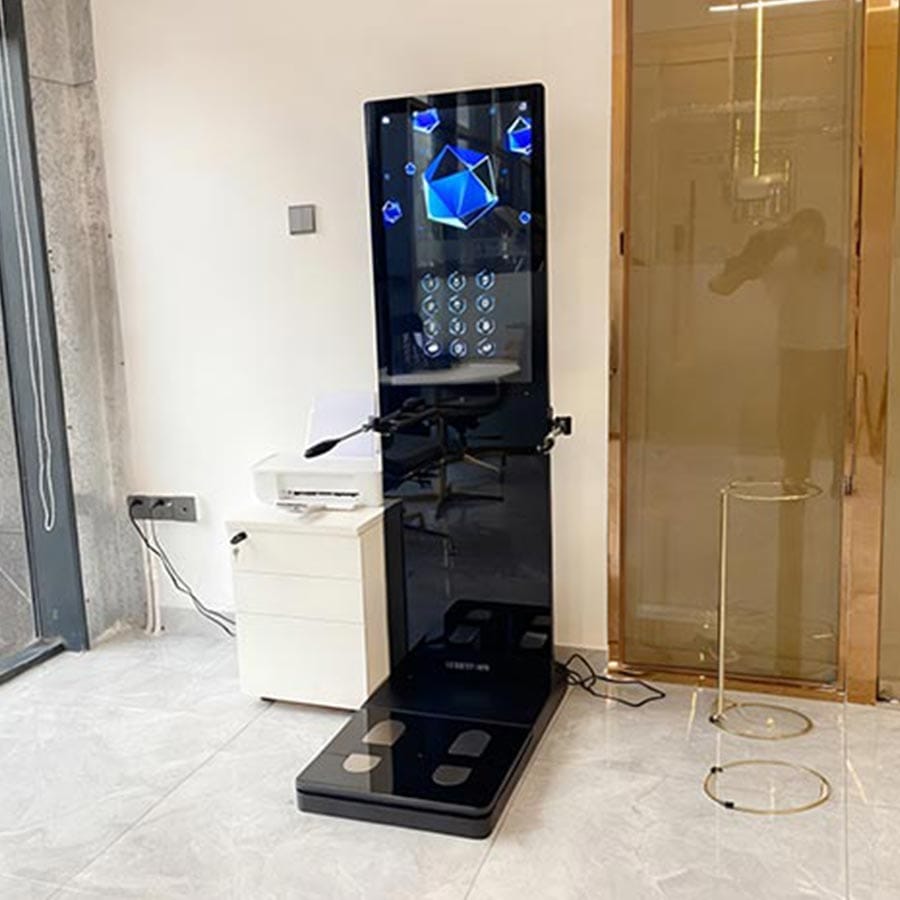
Optimizing your investment extends beyond initial selection to ongoing operation and utilization.
Educating Staff and Members on Proper Use
Comprehensive training ensures consistent, accurate measurements:
Staff Training Should Cover:
- Proper measurement protocols and preparation
- Interpreting results and explaining metrics to members
- Integrating data into consultations and program design
- Troubleshooting common measurement issues
Member Education Should Include:
- What measurements mean and why they matter
- Proper preparation for accurate results
- How to track progress over time
- Realistic expectations for rate of change
Develop standard operating procedures and reference guides for both staff and members. Consistent protocols improve data quality and member satisfaction.
Regular Calibration and Maintenance
Scheduled maintenance preserves accuracy and extends equipment life:
- Daily: Clean electrodes with appropriate solutions, check for damage
- Weekly: Verify calibration against known weights if applicable
- Monthly: Professional inspection and calibration check
- Annually: Comprehensive service by manufacturer or certified technician
Maintain detailed maintenance logs documenting all service activities. This ensures warranty compliance and provides quality control documentation.
Leveraging Reports for Member Retention
Transform measurement data into retention tools:
- Progress Celebrations: Automated notifications of significant improvements
- Goal Achievement: Recognition when members reach targets
- Plateau Alerts: Proactive outreach when progress stalls
- Re-engagement Campaigns: Targeted communications for inactive members with previous data
Use body composition data as the foundation for personalized communication demonstrating your gym’s investment in each member’s success. This creates emotional connections that drive loyalty and retention.
Conclusion
Selecting the right body analyzer for your gym represents one of the most impactful equipment decisions you’ll make. Beyond simple measurement, quality body composition analysis transforms how you assess progress, design programs, and engage members.
The benefits are clear: enhanced accuracy provides reliable data for decision-making, measurable results motivate members through objective progress tracking, and personalized capabilities elevate training quality. These advantages translate directly to improved member retention, increased personal training revenue, and stronger competitive differentiation.
When choosing equipment, prioritize features that align with your specific operational context. Small studios may find smart analyzers sufficient, while large facilities benefit from professional-grade systems with segmental analysis. Regardless of category, emphasize measurement accuracy, robust data management, and seamless connectivity. These capabilities determine real-world utility and long-term value.
Remember that body analyzer technology continues evolving rapidly. Investing in quality equipment with upgrade potential and strong manufacturer support ensures your gym stays current with advancing capabilities. The right body composition analyzer isn’t just a measurement tool—it’s a strategic asset positioning your facility for sustained success in an increasingly data-driven fitness landscape.
For gym owners committed to excellence, a high-quality body analyzer scale or smart body analyzer represents more than equipment expense—it’s an investment in your members’ success and your business’s future. By providing the insights necessary for truly personalized fitness programming, you create value that keeps members engaged, motivated, and achieving their goals. That’s the foundation of a thriving fitness business in today’s competitive market.
FAQ
What is a body analyzer and how does it work?
A body analyzer is a device that measures your body composition using bioelectrical impedance analysis (BIA) technology. It sends safe, low-level electrical currents through your body to measure how quickly different tissues conduct electricity. Since muscle and water-rich tissues conduct electricity faster than fat, the analyzer calculates your body fat percentage, muscle mass, hydration levels, and other metrics based on this resistance.
How accurate are body analyzers compared to other methods?
Professional body analyzers with multi-frequency BIA technology achieve accuracy within 3-5% of DEXA scans (the gold standard), making them suitable for clinical and athletic use. Consumer-grade digital scales typically have 5-10% error margins. For consistent trend tracking, professional devices provide reliable data when used with proper protocols, while basic scales offer general guidance for home fitness monitoring.
What should I look for when choosing a body analyzer for my gym?
Key features include multi-frequency BIA technology for enhanced accuracy, segmental analysis capability, multi-user profile support with secure data storage, and connectivity options like Bluetooth or Wi-Fi for seamless integration with gym management software. Also consider electrode configuration (8-point systems offer superior reproducibility), validation data from independent studies, and comprehensive reporting capabilities for member progress tracking.
How often should gym members use a body analyzer?
For optimal tracking, recommend measurements every 4-6 weeks for general members and monthly for personal training clients. Consistent timing is crucial—measure at the same time of day, ideally in the morning before eating or exercising. This frequency allows enough time for meaningful body composition changes while maintaining motivation through regular progress updates. Avoid daily measurements as natural daily fluctuations can obscure true progress.
Can body analyzers help with member retention?
Yes, body analyzers significantly improve member retention by providing objective, measurable progress that validates training efforts. Research shows gyms offering regular body composition analysis experience 27% higher retention rates. Members who see visual evidence of their progress—decreasing body fat, increasing muscle mass, improving hydration—become more engaged and committed to their fitness journey. The data also enables personalized programming that delivers better results, further enhancing satisfaction and loyalty.