
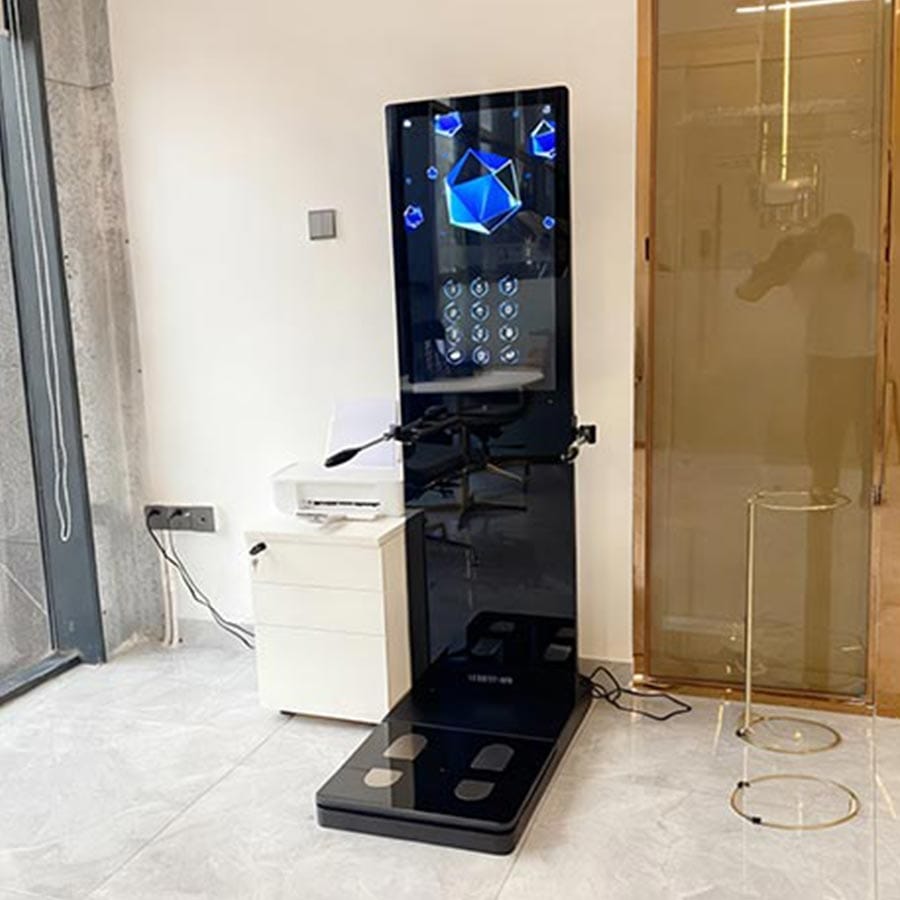



A gym body composition analyzer is no longer just a “nice extra” beside the reception desk. For modern fitness centers, it can become one of the most practical tools for member onboarding, personal training conversion, progress tracking, and long-term retention.
Many gym members start with a simple goal: lose weight, build muscle, look better, move better, or feel healthier. But after a few weeks, the scale may not tell the full story. A member may gain muscle while losing fat. Another may reduce waist circumference while body weight stays similar. Someone else may train consistently but fail to see visible changes because hydration, nutrition, or recovery is not aligned with the program.
This is where a professional gym body composition analyzer creates value. It helps gyms move from vague motivation to measurable progress. Instead of only saying “keep going,” trainers can show members what is changing, what needs attention, and what the next training phase should focus on.
For fitness businesses, that data can support a better member experience and a stronger commercial model.
Table of Contents
Why Gyms Need More Than a Weight Scale
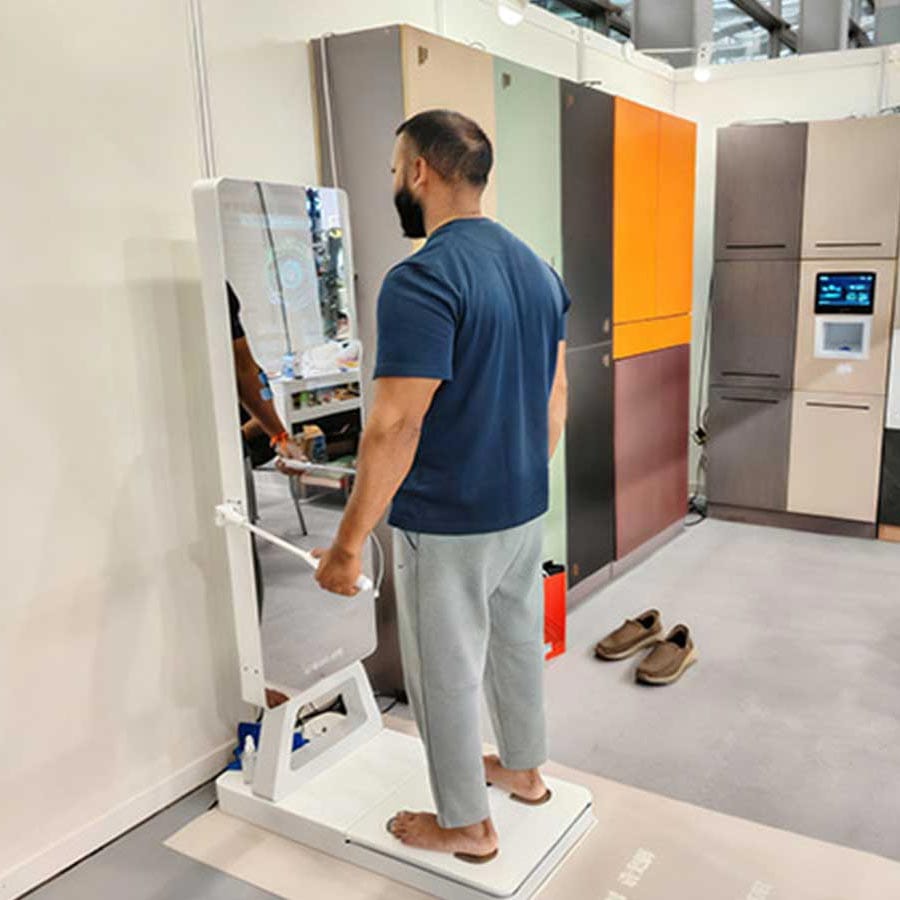
A regular weight scale gives one number. That number may be useful, but it can also mislead members. Weight does not show whether a person is losing fat, gaining skeletal muscle, improving body water balance, or changing body shape.
The CDC notes that BMI does not directly measure body fat, which is one reason many health and fitness professionals use additional assessment tools when they need a more complete understanding of body condition. You can use the CDC’s explanation of BMI and body composition limitations as an educational external resource for members.
A gym body composition analyzer helps translate training progress into data points such as:
| Measurement | How It Helps Gym Members |
|---|---|
| Body fat percentage | Shows fat-loss progress beyond body weight |
| Skeletal muscle mass | Helps members understand muscle gain and strength progress |
| Segmental muscle | Reveals left-right or upper-lower body differences |
| Body water | Helps explain short-term fluctuations |
| Visceral fat level | Supports wellness and lifestyle coaching conversations |
| Basal metabolic rate | Helps trainers explain energy needs more clearly |
| Body circumference | Makes body-shape progress easier to visualize |
| Posture assessment | Helps identify movement and alignment issues |
| Historical reports | Turns one-time testing into long-term progress tracking |
For gyms, this matters because visible progress improves confidence. When members understand progress, they are more likely to continue training, renew memberships, and invest in professional coaching.
The Hidden Business Value of a Gym Body Composition Analyzer
Many gym owners think of a body analyzer as assessment equipment. That is true, but it is also a business tool.
A gym body composition analyzer can support several high-value business functions:
- New member onboarding
- Personal training consultations
- Monthly progress reviews
- Body transformation challenges
- Nutrition coaching programs
- Rehabilitation or corrective training services
- Member reactivation campaigns
- Premium membership packages
The value is not only in the test itself. The real value comes from what happens after the test.
A member who receives a clear report is easier to guide. A trainer who has body composition data can recommend a more specific plan. A manager who tracks testing frequency can identify members who are engaged and members who may need follow-up.
Luofit’s body composition analysis products are designed for commercial health and fitness environments, including gyms, yoga/Pilates studios, rehabilitation centers, clinics, and nutrition centers. The product range includes professional models such as Body Analyzer LW-880, Body Analyzer LW-770, and Body Analyzer LW-870, which support body composition analysis, posture-related assessment, intelligent reporting, and commercial application scenarios.
How to Use Body Composition Testing During Member Onboarding
The first 7 to 14 days of a new membership are critical. This is when a member decides whether the gym feels professional, supportive, and worth continuing.
A gym body composition analyzer can make onboarding more structured.
Instead of simply giving a tour of equipment, the gym can create a “baseline assessment experience.” This makes the member feel that their fitness journey is being taken seriously from day one.
A practical onboarding flow may look like this:
| Step | What Happens | Business Purpose |
| Welcome conversation | Ask about goals, training history, and concerns | Builds trust |
| Body composition test | Measure fat, muscle, water, and key indicators | Creates baseline data |
| Report explanation | Explain 3–5 key results in simple language | Shows professionalism |
| Training recommendation | Match data to a starter plan | Supports program conversion |
| Follow-up schedule | Book the next scan in 4–6 weeks | Creates retention loop |
The key is not to overwhelm the member with every number. Most new members only need to understand what matters most for their goal.
For example, a fat-loss member may care about body fat percentage, waist-related changes, and skeletal muscle retention. A strength-training member may care more about muscle mass, segmental balance, and basal metabolic rate. A posture-focused member may need body shape and alignment insights.
This is where a professional report becomes a conversation tool, not just a data sheet.
Turning Body Composition Reports Into Personal Training Sales
Personal training is often sold through trust. Members need to believe that the trainer understands their body, their goals, and their barriers.
A gym body composition analyzer gives trainers a stronger starting point.
Instead of saying:
“You should train with us three times per week.”
A trainer can say:
“Your report shows that your body fat percentage is higher than your target range, but your skeletal muscle base is a good starting point. The next phase should focus on strength training, nutrition consistency, and monthly reassessment so we can protect muscle while reducing fat.”
That conversation feels more professional because it is based on data.
A good body composition report can help trainers explain:
- Why strength training matters for fat loss
- Why muscle gain may slow scale-weight changes
- Why body water affects short-term readings
- Why uneven segmental muscle may affect movement quality
- Why monthly reassessment is better than daily weighing
- Why a customized plan is more effective than random workouts
The CDC’s adult physical activity guidance recommends both aerobic activity and muscle-strengthening activity for adults, which gives trainers a useful public-health reference when explaining balanced program design. You can link to the CDC’s physical activity guidance for adults when writing educational content for members.
A gym body composition analyzer should not be used to pressure members. It should be used to educate them. When members understand their own data, they are more open to professional guidance.
The Best Metrics to Show Different Types of Gym Members
Not every member needs the same explanation. A common mistake is giving every user the same report walkthrough.
A better approach is to match the report explanation to the member’s goal.
| Member Goal | Best Metrics to Emphasize | Coaching Angle |
| Fat loss | Body fat percentage, visceral fat level, waist data | Reduce fat while maintaining muscle |
| Muscle gain | Skeletal muscle mass, segmental muscle, basal metabolic rate | Build balanced lean mass |
| General fitness | BMI, body fat, muscle, water, body age | Improve overall physical condition |
| Posture improvement | Body shape, posture risk, shoulder/pelvic alignment | Improve movement quality and body alignment |
| Strength training | Segmental muscle, muscle balance, progress trend | Track muscle development |
| Weight management | Fat mass, muscle mass, body water, trend reports | Avoid relying only on scale weight |
| Senior fitness | Muscle mass, balance-related indicators, body water | Support safe and consistent activity |
| Youth fitness | Growth-appropriate body data, posture, movement guidance | Support healthy development with professional supervision |
This targeted explanation helps members feel understood. It also helps trainers recommend services naturally.
For example, if a member has low muscle mass and a high body fat percentage, a trainer can explain why resistance training should be part of the plan. If posture data shows shoulder imbalance or forward head posture, the gym may recommend corrective exercise, Pilates, mobility training, or posture-focused sessions.
Luofit’s services page highlights gym applications such as helping facilities scientifically understand members’ bodies and develop efficient exercise plans, which matches this type of data-driven coaching workflow.
Creating a Monthly Retention System Around Body Data

One scan is useful. A trend is more powerful.
The strongest way to use a gym body composition analyzer is to build it into a monthly member-retention system. The goal is to make members return not only to work out, but also to check progress, review their plan, and adjust their goals.
A simple monthly system can include:
| Timing | Action | Purpose |
| Week 1 | Initial body composition test | Establish baseline |
| Week 2 | Training plan check-in | Improve early adherence |
| Week 4 | First progress scan | Show early changes |
| Week 8 | Training adjustment | Prevent plateau |
| Week 12 | Full progress review | Encourage renewal or upgrade |
This creates a clear reason for members to stay engaged.
Many members quit because they do not see progress quickly enough. A body analyzer can show progress that the mirror or scale may not reveal. For example, a member may only lose a small amount of body weight but gain muscle and reduce body fat percentage. Without body composition data, that member may feel frustrated. With data, the trainer can show that the program is working.
That moment can protect retention.
How to Run a Body Transformation Challenge With Better Data
Body transformation challenges are popular because they create urgency, community, and motivation. However, if a challenge only uses body weight, it may encourage unhealthy thinking or inaccurate results.
A gym body composition analyzer makes challenges more meaningful by measuring multiple indicators.
Instead of ranking members only by weight loss, gyms can track:
- Body fat percentage change
- Skeletal muscle improvement
- Waist or circumference changes
- Visceral fat level improvement
- Segmental muscle balance
- Attendance consistency
- Personal progress score
This creates a healthier and more professional challenge format.
A better challenge structure may include:
Baseline Assessment
Every participant completes a body composition test before the challenge begins. Staff explain that the goal is not simply to become lighter, but to improve body composition.
Personalized Goal Setting
Members choose goals such as fat reduction, muscle gain, improved body shape, or better training consistency.
Midpoint Review
A mid-challenge scan helps members adjust training and nutrition before the final assessment.
Final Report
The final report compares baseline and final data, allowing trainers to explain what improved and what should come next.
Follow-Up Offer
After the challenge, the gym can offer personal training, nutrition coaching, or a progress maintenance package.
This creates a strong business pathway: challenge participation leads to data, data leads to consultation, consultation leads to ongoing services.
Why Testing Conditions Matter for Reliable Results
Body composition analysis can be very useful, but gyms need to standardize the testing process. Bioelectrical impedance analysis, commonly known as BIA, estimates body composition by measuring the electrical properties of body tissues. Research reviews note that BIA is widely used for body composition assessment, but results can be influenced by factors such as hydration and testing conditions. You can link to this PubMed Central overview of body composition assessment and BIA for readers who want deeper technical background.
For gym use, staff should follow a consistent testing routine:
| Testing Rule | Why It Matters |
| Test at a similar time of day | Reduces daily fluctuation |
| Avoid testing immediately after intense exercise | Exercise can affect fluid distribution |
| Keep hydration habits consistent | Body water can influence readings |
| Remove heavy accessories | Improves weighing consistency |
| Stand correctly on the device | Supports repeatable measurement |
| Use the same testing process each time | Makes trend comparison more meaningful |
ACSM’s body composition assessment resources also emphasize standardized protocols and the advantages and limitations of different body composition methods. Linking to ACSM’s Body Composition Assessment can strengthen the educational authority of gym content.
The message to members should be simple: do not overreact to one scan. Look at the trend over time.
Where to Place a Gym Body Composition Analyzer
The physical location of the machine affects how often it gets used.
A gym body composition analyzer should be visible enough to attract attention but private enough for members to feel comfortable. Body data can feel personal, so placement matters.
Good locations include:
| Location | Best For | Notes |
| Consultation room | Personal training sales | Best for private report explanation |
| Member assessment area | Onboarding and monthly scans | Good balance of access and privacy |
| Trainer desk area | Coaching workflow | Easy for staff to guide users |
| Wellness zone | Premium membership services | Supports high-end positioning |
| Reception-adjacent space | Lead generation | Works if privacy is protected |
Avoid placing the analyzer in a crowded walkway where members feel exposed. Also avoid hiding it in a back room where staff forget to use it.
The best setup is usually a dedicated assessment corner with enough space, clear signage, and a staff-guided workflow.
How to Train Staff to Explain the Report
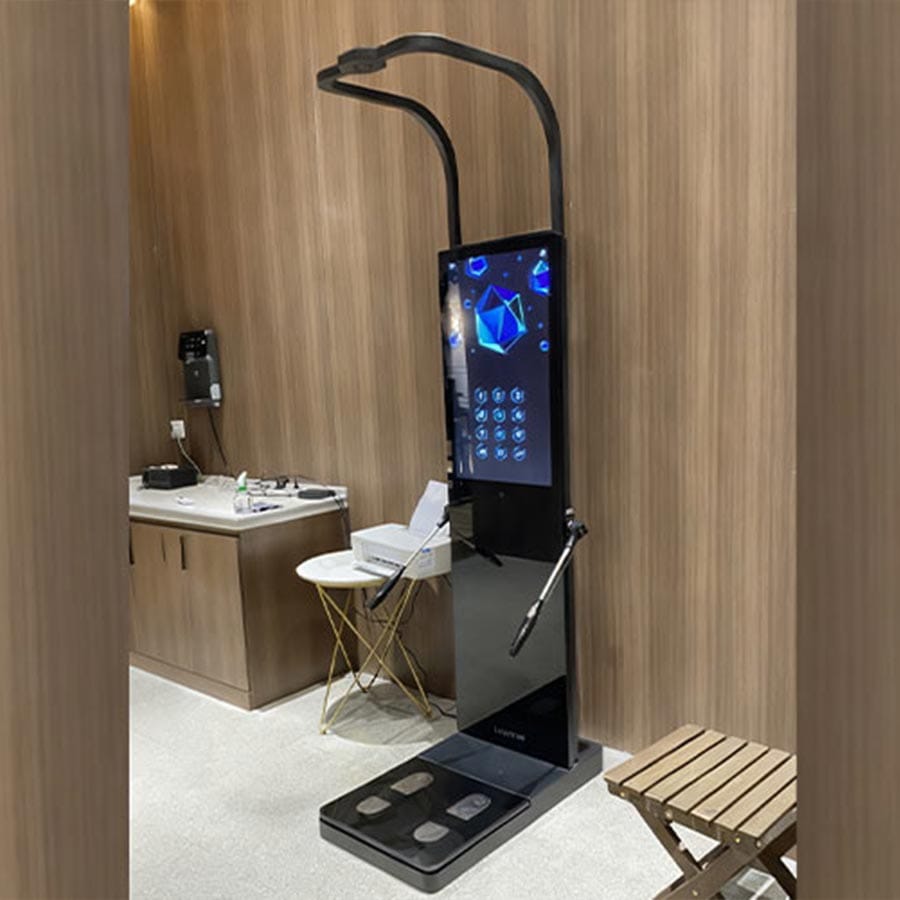
The machine creates the report, but staff create the value.
A gym body composition analyzer will not improve retention if staff simply print a report and hand it to the member. Trainers need a simple explanation system.
A useful structure is the “3-Point Report Talk”:
1. What Is Going Well
Start with one positive finding. This prevents the conversation from feeling negative.
Example: “Your skeletal muscle level gives us a good base for strength training.”
2. What Needs Attention
Identify one or two improvement areas.
Example: “Your body fat percentage and visceral fat level suggest that we should focus on fat reduction and nutrition consistency.”
3. What We Will Do Next
Connect the data to a practical plan.
Example: “For the next four weeks, we’ll combine resistance training, moderate cardio, and weekly habit tracking. Then we’ll scan again to measure progress.”
This structure makes the report easier to understand and turns data into action.
Choosing the Right Analyzer Model for a Gym
Different gyms need different equipment. A large fitness center may need advanced reporting, cloud data management, and multi-terminal display. A boutique studio may prioritize appearance, body shape assessment, and guided consultation. A gym with rehabilitation or corrective exercise services may need posture and segmental analysis.
When comparing a gym body composition analyzer, focus on these factors:
| Buying Factor | Why It Matters |
| Multi-frequency BIA | Supports more detailed body composition analysis |
| Eight-electrode measurement | Helps with segmental analysis |
| Fast testing process | Reduces waiting time during peak hours |
| Report clarity | Helps members understand results |
| Historical tracking | Supports retention and progress reviews |
| Posture analysis | Adds value for corrective training and Pilates programs |
| Cloud or backend management | Useful for multi-member data tracking |
| Mobile or printed reports | Fits different consultation workflows |
| OEM/ODM support | Useful for distributors or branded fitness chains |
| After-sales support | Important for long-term commercial operation |
For gyms seeking a comprehensive assessment experience, the Body Analyzer LW-880 supports body composition analysis, body shape assessment, body circumference measurement, posture-related evaluation, multi-terminal report display, cloud data management, and commercial use scenarios.
For gyms that want body impedance analysis combined with AI-powered 3D posture risk assessment, the Body Analyzer LW-770 provides a strong fit for fitness centers, health clinics, rehabilitation institutions, and wellness programs.
Gyms comparing multiple solutions can start from Luofit’s product page or submit project requirements through the Contact Us page.
Building a Simple Gym Data Dashboard
A gym body composition analyzer can also help managers understand business performance.
Instead of only tracking check-ins and membership sales, gyms can track assessment-related indicators:
| KPI | What It Shows |
| New members tested | How well onboarding is implemented |
| Monthly repeat scans | Member engagement level |
| PT conversion after scan | Sales effectiveness |
| Challenge participation | Community engagement |
| Average progress review attendance | Retention potential |
| Members with no follow-up scan | At-risk member group |
| Report-to-plan conversion rate | Coaching quality |
| Renewal rate among tested members | Long-term value |
This turns body composition testing into a measurable business system.
For example, if many new members receive a scan but few book a follow-up, the issue may be staff explanation. If repeat scans are high but personal training conversion is low, the reports may not be connected clearly to training plans. If scan participation is low, the gym may need better signage, member education, or staff incentives.
The analyzer provides body data, but management turns that data into growth.
Common Mistakes Gyms Should Avoid
A gym body composition analyzer can deliver strong value, but only when used correctly.
Mistake 1: Letting Members Test Without Explanation
Self-service testing may be convenient, but without explanation, members may misunderstand the results. Staff should guide first-time users and explain the most important indicators.
Mistake 2: Talking Too Much About Numbers
Members do not need a technical lecture. They need to understand what the results mean for their goal.
Mistake 3: Using the Analyzer Only for New Members
The highest value comes from repeat testing. Build monthly or quarterly scans into your member journey.
Mistake 4: Comparing Members Against Each Other
Body composition data should support personal progress, not public comparison. Challenges should reward improvement and consistency.
Mistake 5: Ignoring Privacy
Body data should be handled respectfully. Use private spaces, secure data practices, and clear staff procedures.
Mistake 6: Failing to Connect Reports to Services
The report should lead to a next step: training plan, nutrition consultation, posture class, personal coaching, or follow-up scan.
A Practical 30-Day Implementation Plan
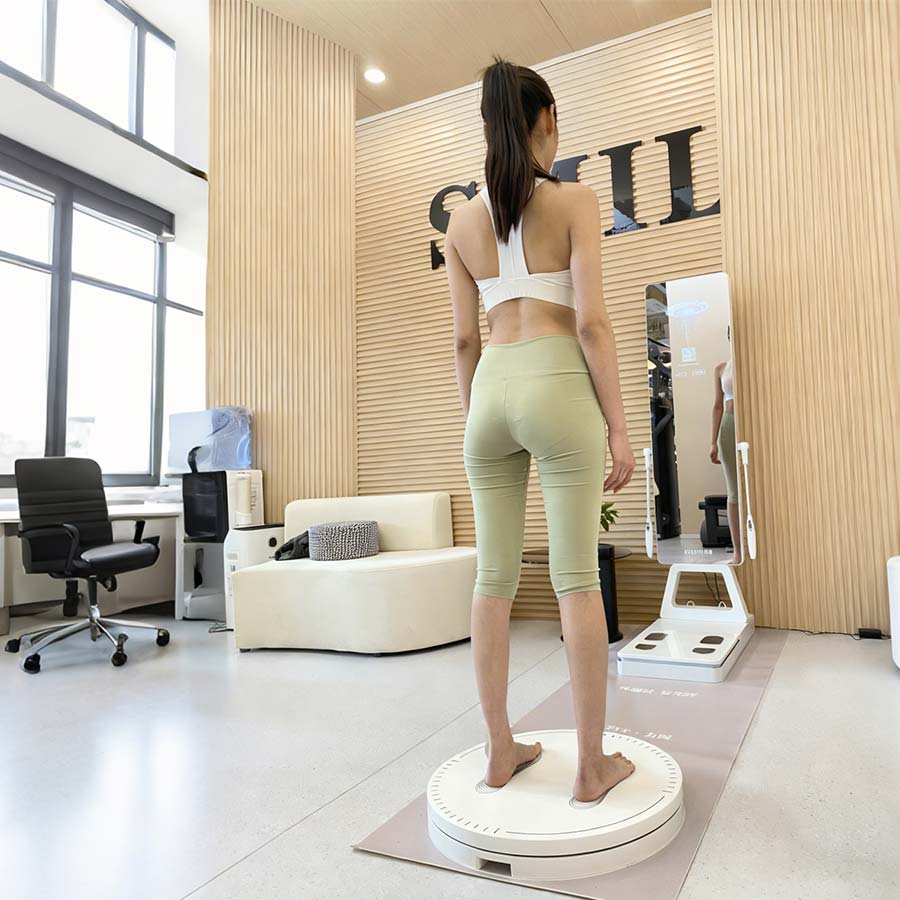
A gym does not need a complicated system to start. Here is a simple 30-day rollout plan.
| Timeframe | Action |
| Days 1–3 | Choose where the analyzer will be placed and train key staff |
| Days 4–7 | Create a simple report explanation script |
| Week 2 | Add body composition testing to new member onboarding |
| Week 3 | Invite existing members for baseline scans |
| Week 4 | Launch monthly progress reviews or a small challenge |
| End of Month | Review scan numbers, PT conversions, and follow-up bookings |
The goal is to make body composition testing part of daily gym operations, not an occasional event.
Conclusion
A gym body composition analyzer can help fitness centers deliver a more professional, data-driven member experience. It gives trainers better information, gives members clearer progress, and gives managers a practical tool for retention and service growth.
The most successful gyms do not use body composition analysis as a one-time test. They build it into onboarding, coaching, monthly reviews, transformation challenges, and premium service packages.
When members can see progress beyond the scale, they are more likely to stay motivated. When trainers can explain data clearly, they are more likely to earn trust. When managers can track assessment engagement, they can improve retention systems.
For fitness centers looking to upgrade member assessment and build stronger data-driven services, Luofit offers professional body composition analyzer products and multi-scenario fitness and health assessment solutions. To discuss model selection, gym applications, distributor cooperation, or OEM/ODM requirements, visit the Contact Us page.
FAQ
What is a gym body composition analyzer?
A gym body composition analyzer is a professional assessment device used in fitness centers to measure body fat, muscle mass, body water, BMI, segmental data, and other body indicators.
How can a body composition analyzer help gym member retention?
It helps members see measurable progress, even when body weight does not change much. This improves motivation and gives trainers a reason to schedule regular progress reviews.
Can gyms use body composition analysis to sell personal training?
Yes. Trainers can use body composition reports to explain member goals more clearly and recommend personalized training plans based on fat, muscle, posture, or progress data.
How often should gym members take a body composition test?
Many gyms use monthly or 4–6 week testing intervals for progress tracking. The key is to test under similar conditions each time.
What features should a gym look for in a body composition analyzer?
Important features include multi-frequency BIA, segmental analysis, clear reports, fast testing, historical data tracking, posture assessment, and reliable after-sales support.