


For gyms, wellness centers, clinics, rehabilitation facilities, and health-focused service providers, body data has become more valuable than a simple number on a scale. Clients no longer want to know only whether their weight has changed. They want to understand whether they are losing fat, gaining muscle, improving hydration balance, or making measurable progress after training, nutrition guidance, or recovery programs.
That is why a commercial body composition analyzer is becoming a practical investment for businesses that want to offer more professional assessments, improve client trust, and create higher-value service experiences. Unlike basic weight scales or consumer-grade smart scales, a commercial system is designed for frequent use, structured reporting, member management, and professional consultation environments.
For business buyers, the challenge is not simply “which machine looks advanced.” The real question is: which commercial body composition analyzer can fit your service model, your staff workflow, your client volume, and your long-term business goals?
This guide explains what to evaluate before choosing a system, how to compare key functions, and how facilities can use body composition analysis to improve both client outcomes and inquiry conversion.
Table of Contents
Why Body Composition Data Matters More Than Weight Alone
Body weight is easy to measure, but it does not explain what is changing inside the body. Two people may have the same weight and BMI, yet very different levels of muscle mass, body fat, visceral fat, body water, and metabolic status.
The CDC explains that BMI does not directly measure body fat, which is why many health and fitness professionals use additional assessment methods when they need a more complete picture of physical condition. You can link this concept to the CDC’s explanation of BMI and its limitations when educating users.
For commercial facilities, this creates a strong service opportunity. A gym can show members whether their training plan is improving skeletal muscle. A nutrition center can track whether dietary guidance is changing body fat and body water trends. A rehabilitation center can monitor body balance and physical condition during long-term recovery support. A wellness business can turn a one-time consultation into an ongoing data-based service.
A commercial body composition analyzer helps convert invisible progress into visible reports. That matters because visible progress improves motivation, retention, and trust.
What a Commercial Body Composition Analyzer Measures
Most professional body composition systems use bioelectrical impedance analysis, commonly known as BIA. BIA estimates body composition by sending a safe, low-level electrical signal through the body and measuring impedance. Because fat, muscle, and water conduct electrical signals differently, the system can estimate multiple body indicators. For readers who want a basic scientific explanation, you can reference bioelectrical impedance analysis.
A commercial body composition analyzer may measure or estimate:
| Measurement Area | Why It Matters for Business Use |
|---|---|
| Body fat percentage | Helps clients understand fat loss beyond body weight changes |
| Skeletal muscle mass | Useful for strength training, rehabilitation, and sports performance programs |
| Body water | Helps explain hydration-related changes in readings |
| Visceral fat level | Supports deeper wellness and lifestyle consultation |
| Basal metabolic rate | Helps trainers and nutrition consultants explain energy needs |
| Segmental muscle and fat | Shows distribution differences between arms, legs, and trunk |
| BMI and weight | Provides familiar baseline indicators |
| Posture or body shape data | Adds visual assessment value when combined with 3D scanning |
| Historical reports | Supports long-term progress tracking and follow-up services |
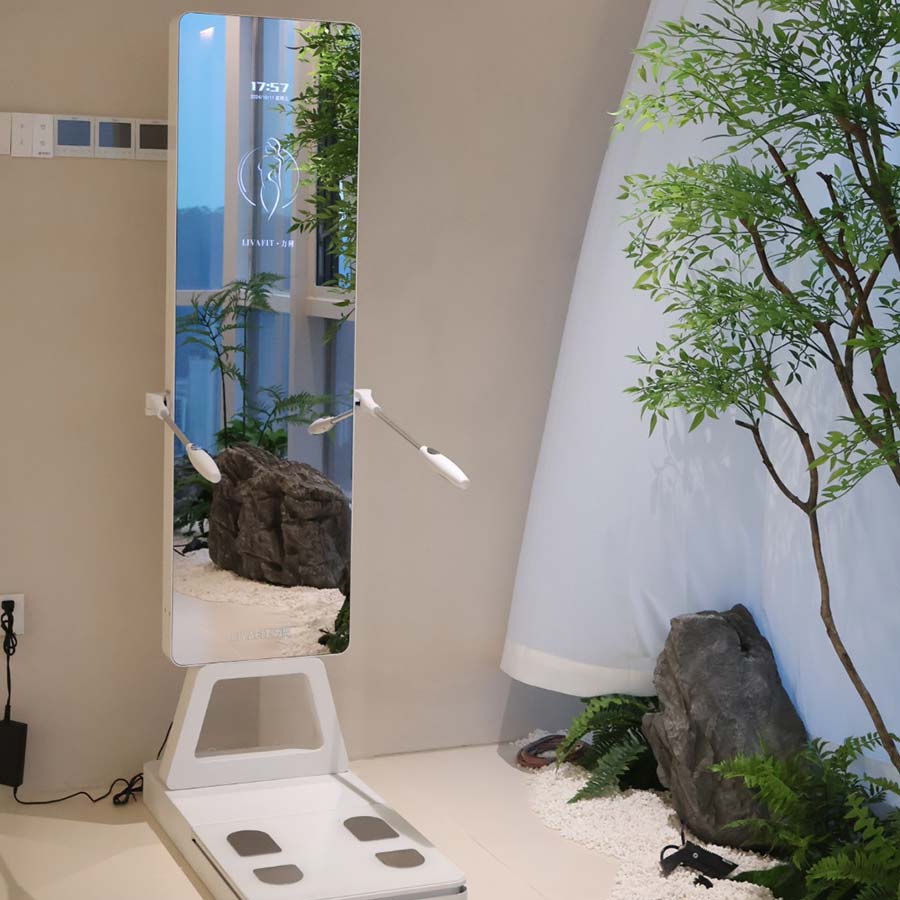
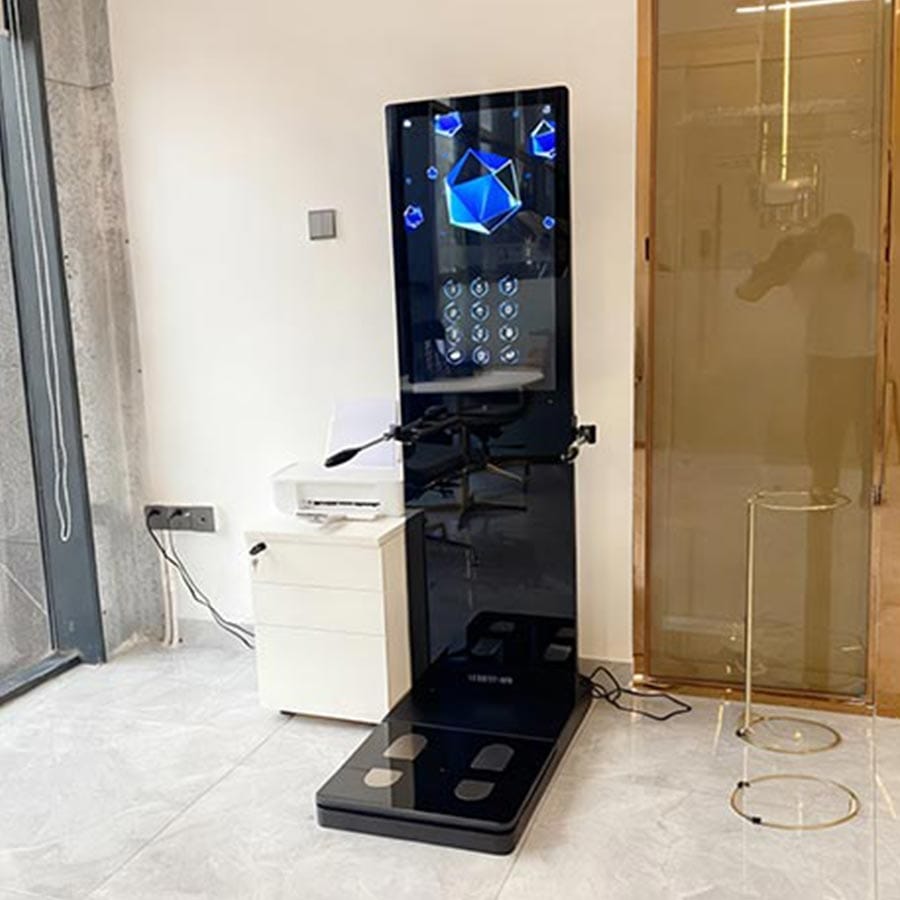
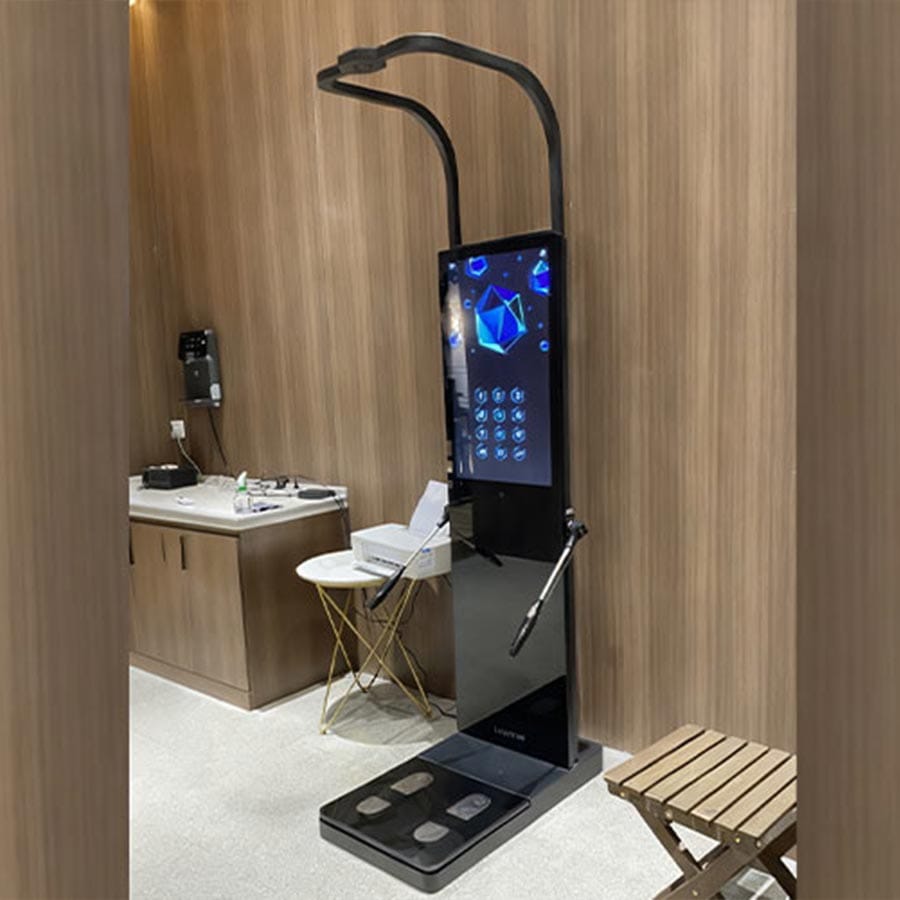
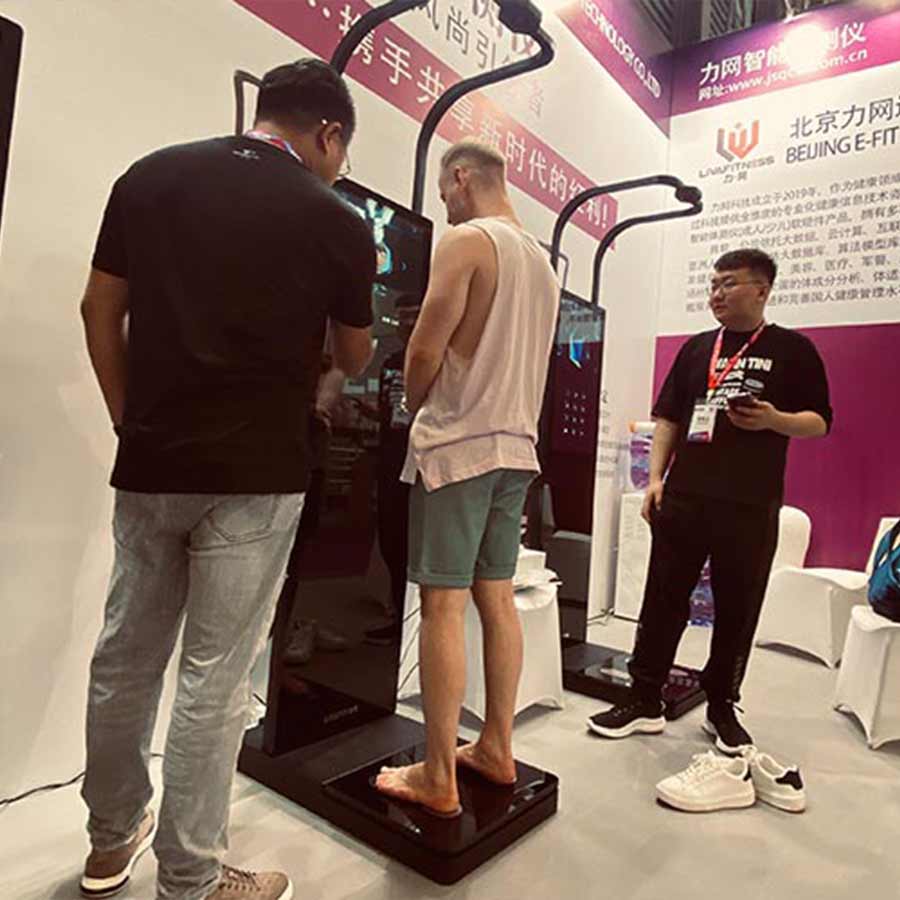
Luofit’s commercial body composition analyzer product range combines BIA-based body composition analysis with intelligent reporting features, making it suitable for businesses that need professional assessment equipment rather than a simple weighing device.
Who Needs a Commercial Body Composition Analyzer?
A commercial body composition analyzer is especially useful for businesses where client progress, member engagement, or health assessment services directly influence revenue.
Gyms and Fitness Centers
Gyms can use body composition analysis during member onboarding, personal training consultations, monthly progress reviews, and body transformation programs. Instead of telling a member to “lose weight,” trainers can explain whether the goal should be fat reduction, muscle development, hydration improvement, or balanced body composition.
This makes personal training easier to sell because the trainer can build recommendations around measurable data.
Yoga and Pilates Studios
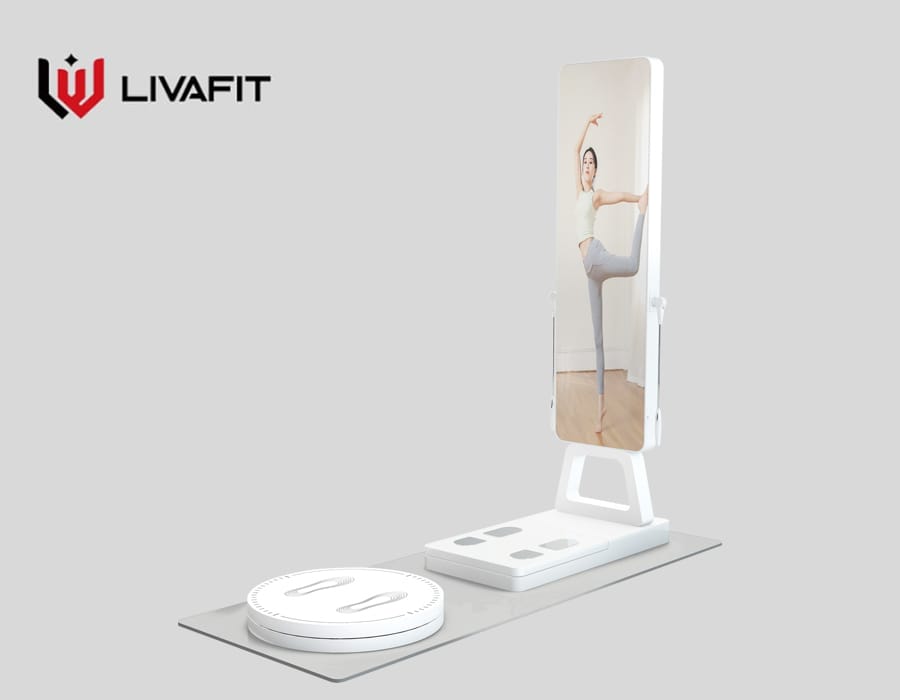
Yoga and Pilates clients often care about posture, body balance, flexibility, and body shape rather than only weight loss. A commercial body composition analyzer with posture or 3D body assessment functions can help studios create more professional consultation experiences.
For example, if a client has uneven shoulders, pelvic tilt, or posture imbalance indicators, the studio can recommend targeted classes or follow-up sessions.
Clinics and Preventive Health Centers
Clinics and preventive health centers can use body composition reports to support weight management, lifestyle guidance, and long-term health monitoring. The equipment should be positioned as an assessment and monitoring tool, not as a replacement for clinical diagnosis.
For this type of buyer, data consistency, report clarity, and professional operation procedures are especially important.
Rehabilitation Centers
Rehabilitation facilities often need to track body balance, muscle condition, and recovery changes over time. A system with segmental analysis and posture assessment can support follow-up evaluations and help therapists communicate progress more clearly.
Luofit’s service solutions cover gyms, rehabilitation centers, nutrition centers, clinics, beauty agencies, and other professional application scenarios.
Nutrition and Weight Management Centers
Nutrition centers need more than a weight record. A commercial body composition analyzer helps consultants show changes in fat, muscle, body water, and metabolism-related indicators. This makes the consultation more persuasive and gives clients a reason to return for follow-up testing.
Distributors and Equipment Resellers
For distributors, the value is not only the product itself. The real selling point is whether the equipment can serve multiple customer groups: gyms, clinics, studios, wellness centers, rehabilitation facilities, and corporate health programs.
If you are sourcing products for local resale or project-based supply, you can review Luofit’s Contact Us page to discuss distributor cooperation, model selection, and OEM/ODM needs.
How to Evaluate Accuracy Without Falling Into Marketing Claims
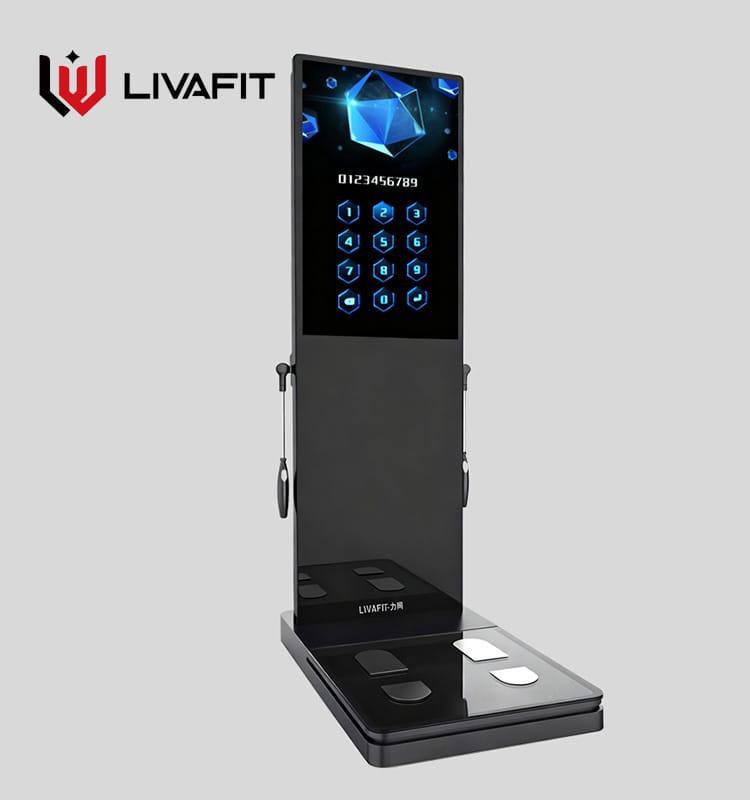
Accuracy is one of the most important buying factors, but it is also one of the easiest areas to misunderstand.
A commercial body composition analyzer should be evaluated by repeatability, measurement method, operating protocol, electrode design, frequency range, user posture during testing, and report logic. The American College of Sports Medicine provides professional resources on body composition assessment methods, including advantages, limitations, and standardized protocols. You can reference ACSM’s Body Composition Assessment as an external authority.
Before purchasing, buyers should ask practical questions:
| Accuracy Check | What to Ask the Supplier |
| Measurement method | Does the system use multi-frequency BIA or basic single-frequency measurement? |
| Electrode design | Does the machine support hand-foot or multi-segment measurement? |
| Test consistency | Can the supplier explain how users should prepare before testing? |
| Repeat testing | Can the same user receive stable readings under similar conditions? |
| Report logic | Are the results easy for staff and clients to understand? |
| Data storage | Can historical reports be reviewed for long-term tracking? |
| Staff training | Does the supplier provide operation guidance and after-sales support? |
It is also important to understand that hydration, recent exercise, food intake, and testing time can influence BIA results. A PubMed Central study on BIA assessment notes that acute fluid intake can affect body composition readings, which is why standard testing conditions matter. You can reference this research on fluid intake and BIA assessment.
For commercial use, this means the equipment is only one part of accuracy. The facility also needs a repeatable testing workflow.
BIA, 3D Body Scanning, and Posture Assessment: Why Hybrid Systems Are Becoming Popular
Traditional body composition analysis mainly focuses on internal body metrics such as body fat, muscle, water, and basal metabolic rate. However, many modern businesses want a more visual experience.
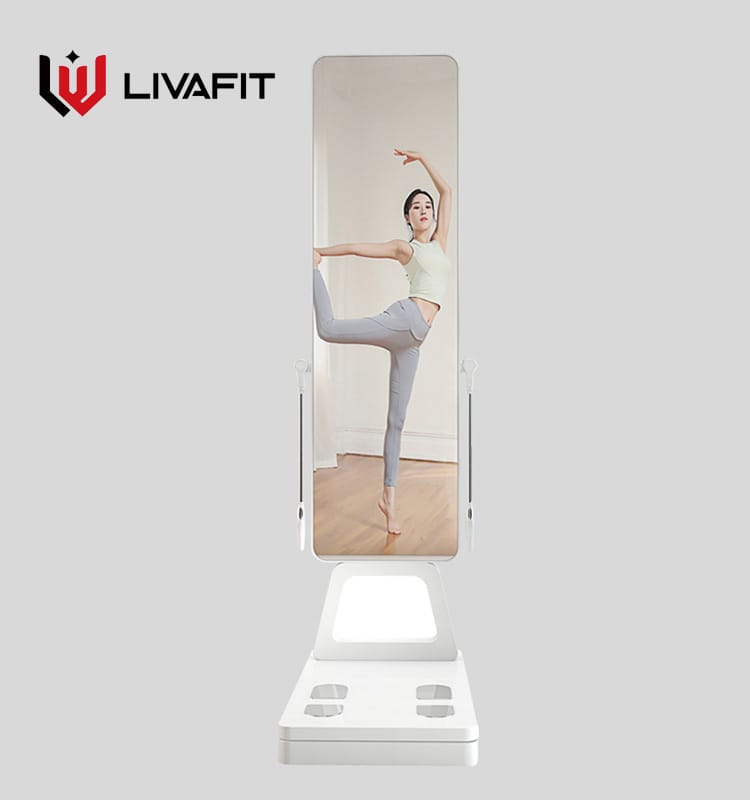
That is where hybrid assessment systems become useful. A commercial body composition analyzer that combines BIA with 3D body scanning or AI posture analysis can provide both numerical and visual feedback.
For example, body fat percentage helps explain internal composition. Segmental muscle analysis helps trainers understand left-right balance. 3D posture assessment can help users see shoulder height, pelvic tilt, X/O legs, rounded shoulders, or other posture-related patterns.
Luofit’s Body Analyzer LW-770 is positioned as a smart body impedance analyzer that integrates body composition analysis with AI-powered 3D posture risk assessment. This type of system is especially useful for gyms, clinics, rehabilitation institutions, and wellness programs that want to provide a more complete assessment experience.
The advantage is simple: clients understand visual reports faster than abstract numbers. When a report shows both body data and posture-related findings, it becomes easier for staff to explain service recommendations.
How to Match the Analyzer to Your Business Model
Different businesses need different equipment priorities. A high-end wellness center may need a large screen, premium appearance, and visual reports. A distributor may care more about product range, OEM support, packaging, and after-sales service. A gym may need fast testing, easy operation, and member report storage.
Use the table below to match the commercial body composition analyzer to your main business scenario.
| Business Type | Priority Features | Recommended Buying Focus |
| Commercial gym | Fast testing, member reports, muscle/fat tracking | Choose a durable system with simple operation and clear progress reports |
| Personal training studio | Segmental muscle, fat analysis, consultation reports | Focus on data that helps sell coaching plans |
| Yoga/Pilates studio | Body shape, posture, visual analysis | Choose a system with 3D or posture-related assessment functions |
| Clinic | Stable readings, professional reports, data history | Focus on measurement consistency and staff training |
| Rehabilitation center | Segmental balance, posture, long-term tracking | Choose equipment that supports repeat assessments |
| Nutrition center | Fat, muscle, body water, metabolism indicators | Choose reports that are easy to explain during consultations |
| Distributor | Product range, OEM/ODM, support, documentation | Work with a manufacturer that can support local market needs |
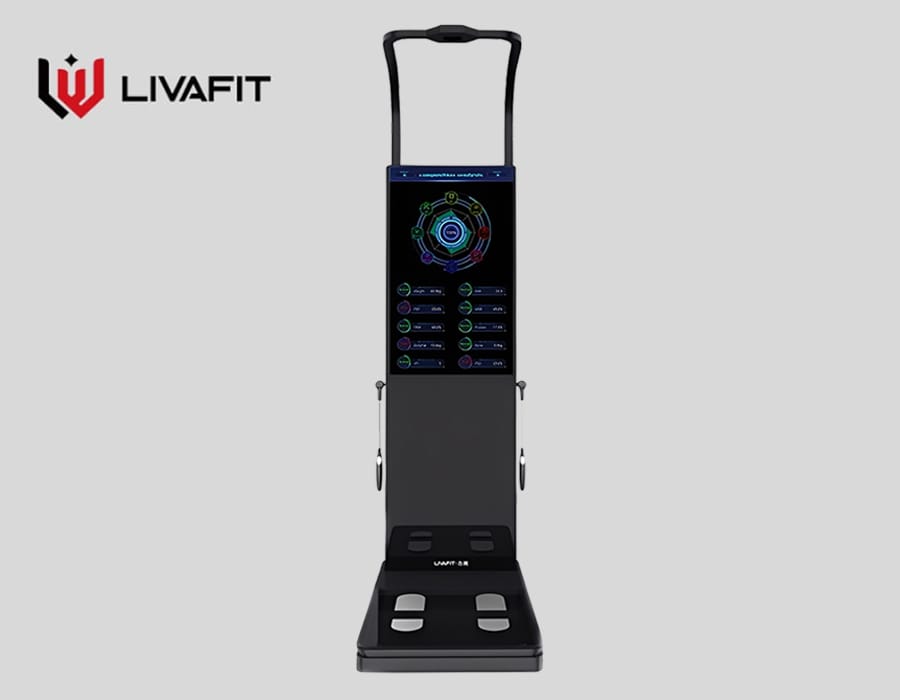
For buyers who want a more comprehensive solution, Luofit’s Body Analyzer LW-880 is designed for professional body composition analysis, body shape assessment, body circumference measurement, intelligent reports, and multi-scenario commercial use.
Report Quality Is What Turns Testing Into Revenue
Many facilities focus too much on hardware and not enough on reports. However, from a business perspective, the report is what the client sees, understands, and acts on.
A good report should not overload the user with technical data. It should help staff explain the result in a structured way:
- What is the client’s current body composition?
- Which indicators are healthy, borderline, or need attention?
- What has changed since the last test?
- What should the client do next?
- When should the client return for another assessment?
A commercial body composition analyzer should support report formats that fit the business workflow. For example, A4 print reports are useful for clinics and consultation desks. Mobile reports are better for gyms and wellness centers where clients want to keep results on their phones. Backend management systems are useful for businesses that track many users over time.
When testing becomes part of a consultation process, it can support higher conversion. A new gym member may be more willing to buy personal training after seeing muscle imbalance or high body fat percentage. A nutrition client may be more willing to continue a program after seeing changes in body water and fat mass. A wellness customer may be more likely to return if the report gives clear next steps.
A Practical Testing Workflow for Better Client Experience
A commercial body composition analyzer works best when the facility has a standard process. Without a process, testing can feel like a random add-on. With a process, it becomes a professional service.
Here is a practical workflow:
Step 1: Pre-Test Guidance
Ask the client to remove heavy accessories, stand naturally, and follow the machine’s instructions. For repeat testing, recommend testing under similar conditions each time, such as the same time of day and similar hydration status.
Step 2: Quick Explanation Before Testing
Staff should briefly explain that the analyzer measures body composition indicators such as fat, muscle, water, and other related metrics. This builds trust before the test begins.
Step 3: Test and Generate the Report
The machine should complete testing efficiently and generate a readable report. A large screen or guided interface helps reduce staff training difficulty.
Step 4: Explain Three Key Results
Instead of explaining every number, staff can focus on three indicators most relevant to the client’s goal. For a gym user, this may be skeletal muscle mass, body fat percentage, and segmental balance. For a nutrition client, it may be body fat, body water, and basal metabolic rate.
Step 5: Connect Results to a Service Plan
The report should lead naturally into a service recommendation. This may include a training plan, nutrition consultation, rehabilitation follow-up, posture improvement session, or monthly body assessment package.
Step 6: Schedule the Next Test
A single test is useful, but trend tracking is more powerful. Encourage clients to repeat testing at planned intervals so progress can be monitored over time.
This workflow turns the commercial body composition analyzer from a piece of equipment into a revenue-supporting service tool.
Key Features to Look for Before Buying
Before choosing a commercial body composition analyzer, buyers should review both technical and business factors.
Multi-Frequency Measurement
Multi-frequency BIA can provide a more detailed analysis than basic measurement systems. For commercial environments, this is important because different users may have different body types, hydration levels, and fitness backgrounds.
Segmental Analysis
Segmental data helps show differences between the left arm, right arm, trunk, and legs. This is valuable for training, rehabilitation, and body balance assessment.
Fast Testing Speed
A gym or clinic may need to test many users in a short time. A slow or complicated machine may reduce staff adoption.
Easy Interface
A touchscreen interface, simple instructions, and clear report layout help staff use the equipment consistently.
Report Export Options
A4 printing, mobile reports, email reports, and backend data viewing can support different business workflows.
Data Management
Long-term historical data is important for client retention. If users can see progress over time, they are more likely to continue services.
OEM/ODM Support
For distributors and project buyers, OEM/ODM support can help with branding, regional market adaptation, and long-term cooperation. Luofit’s product and service pages mention OEM/ODM and distributor cooperation, making Contact Us a useful internal link for buyers with sourcing needs.
After-Sales Service
Commercial equipment should not be evaluated only at the purchase stage. Buyers should also ask about installation guidance, training materials, remote support, software updates, and warranty terms.
Common Mistakes Buyers Should Avoid
Choosing a commercial body composition analyzer without a clear plan can lead to poor usage and weak return on investment. Here are common mistakes to avoid.
Mistake 1: Buying Only by Appearance
A modern design is useful, but it should not be the only decision factor. Measurement method, reporting, durability, software, and supplier support matter more in daily operation.
Mistake 2: Ignoring Staff Training
Even a good machine can produce poor user experience if staff cannot explain the report. The supplier should provide guidance, and the business should create a simple explanation script.
Mistake 3: Treating One Test as a Final Answer
Body composition analysis is most valuable when used for trend tracking. Encourage clients to compare results over time instead of overreacting to one reading.
Mistake 4: Not Standardizing Testing Conditions
Hydration, food intake, exercise, and time of day may affect readings. Facilities should use a consistent testing routine to improve repeatability.
Mistake 5: Choosing a System Without Data Management
If the machine cannot store or review historical data, the business loses one of the strongest retention tools.
Mistake 6: Forgetting the Sales Scenario
The analyzer should support your sales process. A gym needs a report that helps sell training. A nutrition center needs a report that supports consultation. A distributor needs models that fit multiple customer segments.
Choosing the Right Commercial Body Composition Analyzer for Your Facility
Selecting a commercial body composition analyzer requires more than comparing specifications. Different facilities have different priorities, and the ideal solution depends on how the equipment will be used in daily operations.
For example, a fitness center may focus on member assessments and progress tracking, while a rehabilitation center may place greater importance on segmental analysis and posture-related evaluations. Nutrition centers often need clear reports that support client consultations, and clinics may prioritize data consistency and long-term record management.
When comparing available options, it is helpful to evaluate factors such as:
- Measurement technology and analysis capabilities
- Report clarity and ease of interpretation
- Data storage and historical tracking functions
- User experience and testing efficiency
- Suitability for your target customer group
- Installation requirements and available space
- Technical support and after-sales service
Businesses looking for different assessment solutions can explore Luofit’s product range to compare available models and features. For example, the Body Analyzer LW-880 is designed for comprehensive body composition and body shape assessment, while the Body Analyzer LW-770 combines body impedance analysis with AI-powered posture evaluation.
By matching equipment capabilities with operational needs, facilities can create a more professional assessment experience and provide clients with meaningful, data-driven insights.
Buyer Checklist Before Sending an Inquiry
Before contacting a supplier, prepare clear information. This will help the manufacturer recommend the right model faster.
| Information to Prepare | Example |
| Business type | Gym, clinic, wellness center, distributor, rehabilitation center |
| Main use case | Member assessment, health screening, posture analysis, weight management |
| Expected testing volume | Daily, weekly, or project-based testing |
| Required report type | Printed report, mobile report, email report, backend data |
| Branding needs | Standard model, OEM branding, ODM customization |
| Installation environment | Available space, power supply, network connection |
| Target users | Adults, children, athletes, general wellness clients |
| Service goal | Improve consultation, sell programs, track progress, support resale |
A clear inquiry makes the buying process more efficient and helps the supplier match the equipment to your actual operating scenario.
Conclusion
A commercial body composition analyzer is more than a digital scale. It is a professional assessment system that can help gyms, clinics, rehabilitation centers, nutrition centers, and wellness businesses deliver clearer data, stronger consultations, and better client engagement.
The right system should provide reliable measurement, easy operation, useful reports, long-term data tracking, and supplier support. For buyers who want to use body composition analysis as a business growth tool, the best choice is not simply the most advanced-looking machine. It is the analyzer that fits your workflow, your clients, and your commercial goals.
If your business needs a professional body composition analyzer for gym, clinic, wellness, rehabilitation, or distribution use, explore Luofit’s commercial body composition analyzer products or send your project requirements through the Contact Us page.
FAQ
What is a commercial body composition analyzer?
A commercial body composition analyzer is a professional device used to measure body fat, muscle, water, BMI, and other body indicators for gyms, clinics, wellness centers, and similar business environments.
Is a body composition analyzer better than a regular scale?
Yes. A regular scale only shows total body weight, while a body composition analyzer helps show what the weight is made of, including fat, muscle, and body water.
Who should buy a commercial body composition analyzer?
Gyms, fitness studios, clinics, rehabilitation centers, nutrition centers, wellness businesses, and distributors can use commercial body composition analyzers to improve assessment services.
How often should clients use a body composition analyzer?
For progress tracking, clients should test regularly under similar conditions. The exact schedule depends on the service program, user goals, and professional guidance.
Can a commercial body composition analyzer help increase gym revenue?
Yes. It can support personal training consultations, member onboarding, progress reviews, and long-term service packages by giving clients clearer data and measurable progress.